
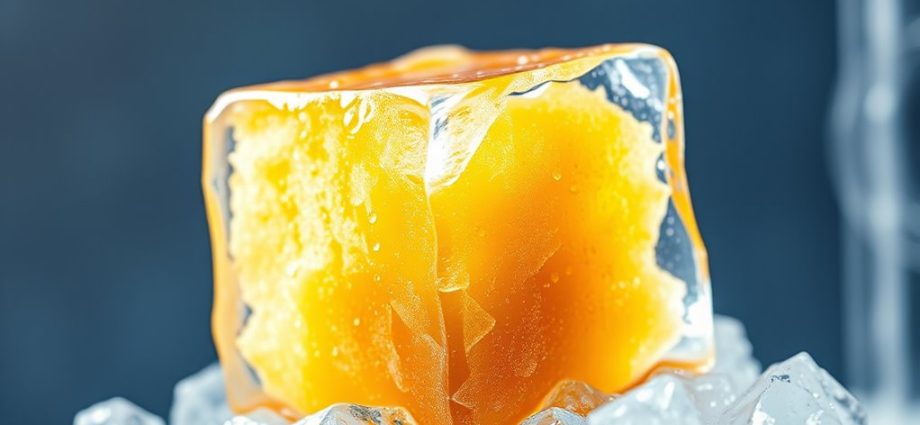
When you freeze fresh pineapple, ice crystals form and disrupt cell structure, making the fruit softer upon thawing. Higher temperatures can lead to larger ice crystals, causing more damage. Nutritionally, you can expect a significant decrease in vitamin C and other antioxidants, while some flavors may diminish as well. Riper pineapples are especially prone to these changes, losing both firmness and nutritional content. If you want to understand more about freezing impacts, there’s plenty to explore.
When you freeze fresh pineapple, notable changes occur at both the cellular and nutritional levels, affecting its overall quality. The temperature at which you freeze the pineapple plays an important role. For instance, if you freeze it at a colder temperature like -86°C, you’ll minimize damage to the cells compared to freezing it at -25°C. At the higher temperature, the slower freezing process allows larger ice crystals to form. These bigger crystals disrupt cell membranes, causing structural integrity issues and leading to loss of cell contents such as sugars and vitamins. This impact on texture is further exacerbated during thawing; for instance, ice recrystallization can lead to even greater tissue damage and dehydration.
The stage of ripeness also heavily influences how the pineapple responds to freezing. Riper fruit tends to require longer freezing times, and this causes more drip loss and a more notable decrease in vitamin C content. Less mature pineapples might showcase higher initial firmness but suffer from lower structural retention post-freezing. Fundamentally, the balance between ripeness and freezing conditions is key; underripe fruit maintains its integrity better than ripe fruit does once frozen and thawed. Additionally, rapid freezing significantly enhances the retention of texture and flavor compared to home freezing methods. It is important to note that blanching vegetables before freezing is a well-recommended practice, but it is not necessary for fruits like pineapple.
The ripeness of pineapple significantly affects its freezing outcome, impacting texture and vitamin C retention.
As ice crystals form, they fracture the cell walls, leading to a softer texture post-thaw. While you might expect the visible quality—like color and appearance—to stay somewhat intact, the underlying changes can be dramatic. Even a single freeze-thaw cycle can reduce volatile aroma compounds vital for that characteristic pineapple scent. After three cycles, your pineapple might retain only around 36% of its fresh volatile content. The loss of key esters such as methyl hexanoate and ethyl hexanoate occurs due to both tissue damage during freezing and the dehydration that follows thawing.
Nutritionally, you can expect losses as well. Vitamin C content decreases considerably during freezing, yet precise freezing methods can improve retention rates. For example, professional individually quick-frozen (IQF) methods can retain over 95% of vitamin C, unlike home freezing techniques that result in gradual nutrient losses. While some nutrients—like flavonoids and β-carotene—remain stable, significant drops in phenolics and antioxidants like ascorbic acid can occur.
Ultimately, the freezing process transforms your pineapple from a crispy, succulent fruit to a softer, more damaged version of itself. The interplay of freezing temperature, ripeness, and freezing speed can dictate whether it retains enough of its appealing texture and flavor. If you’re aiming to keep those vibrant properties intact, paying attention to how you freeze that fresh pineapple is key. Remember, with the right technique, you can enjoy frozen pineapple without too much compromise on quality.
Conclusion
Freezing fresh pineapple transforms its juicy texture and vibrant flavor, akin to capturing summer’s essence in ice. When thawed, you might find it changes, becoming softer and releasing more juice, much like a bittersweet memory—beautiful yet altered. While it remains a delightful addition to smoothies or desserts, the experience of biting into a fresh slice is unparalleled. So, savor the moment while it lasts, for the frozen version merely echoes the original’s brilliance, like a shadow of a sun-drenched day.
Comments are closed, but trackbacks and pingbacks are open.