
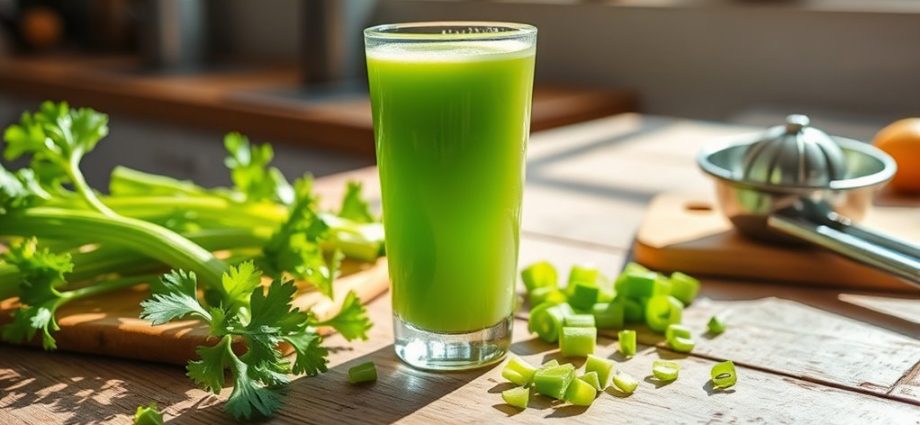
Celery juice is simply the liquid from blended or pressed celery stalks and leaves, giving you a low‑calorie drink (about 33 calories per 8 ounces) that’s rich in water, potassium, and vitamins A, C, and K. It offers antioxidants and may support hydration and heart health as part of an overall balanced diet, but it’s not a miracle detox or cure. If you’re curious about what it can and can’t do for your health, you’re in the right place.
Celery juice has surged in popularity as a supposed cure-all, but its actual benefits are more modest and specific. When you drink celery juice, you’re primarily consuming the liquid extracted from celery stalks, with most of the pulp and fiber removed. That process concentrates certain vitamins, minerals, and plant compounds while sacrificing the bulk that supports digestion and satiety. Understanding what stays in the juice and what’s lost helps you decide how it fits into your diet.
An eight-ounce glass of celery juice provides vitamins A, C, and K, which support immune function, skin integrity, and blood clotting and bone health. You also take in minerals such as potassium, calcium, magnesium, zinc, and copper that participate in cardiovascular and metabolic processes. Because the juice is mostly water and only about 33 calories per serving, it works as a very low-calorie hydration option, especially if you want something more flavorful than plain water but lighter than fruit juice or soda.
Celery juice delivers key vitamins and minerals in a light, low-calorie, flavorful drink that hydrates without the sugar load
Celery juice’s high water content contributes meaningfully to your daily fluid intake, which matters for kidney function, skin hydration, and overall performance. It’s particularly rich in potassium, offering roughly 600 milligrams per eight ounces, an amount that helps regulate fluid balance, nerve signaling, and blood pressure by counteracting some effects of dietary sodium. By preventing mild dehydration, regular intake can indirectly support concentration, mood, and exercise endurance, though it doesn’t outperform water plus a balanced diet.
Beyond basic hydration, celery juice contains antioxidants such as apigenin, luteolin, and other flavonoids that help neutralize free radicals and reduce oxidative stress. Because it contains these plant compounds, celery juice may modestly help reduce inflammation throughout the body. In laboratory and animal studies, these compounds show anti-inflammatory effects and potential roles in protecting blood vessels, modulating cholesterol metabolism, and lowering long-term risk for heart disease and some cancers.
Natural nitrates and bioactive phthalides in celery may promote vasodilation and inhibit early atherosclerosis, so including the juice as part of a heart-conscious eating pattern can be reasonable, though it shouldn’t replace prescribed treatments or proven lifestyle strategies.
Claims that celery juice detoxifies your body or heals the gut aren’t supported by strong clinical research. The fresh juice lacks most of the fiber in whole celery, so it doesn’t feed beneficial gut bacteria or add bulk to stools the way the vegetable does. Without fiber, the drink may leave you less satisfied and may blunt blood-sugar spikes less effectively than the intact stalks. Most of the bold detox and disease-curing claims made about celery juice lack solid evidence and should be viewed with skepticism.
You do still gain some anti-inflammatory compounds, such as luteolin, which might soothe low-grade gut inflammation, but that effect remains theoretical for most people.
In practice, you’ll get the most from celery juice when you view it as one vegetable-based drink among many, not a miracle therapy. It can complement whole vegetables, fruits, legumes, and adequate water, but you shouldn’t rely on it to treat medical conditions or replace professional care in any way.
Conclusion
When you drink celery juice, you’re mostly getting water and a modest boost of vitamins, minerals, and antioxidants—not a miracle cure. You might enjoy that one cup (240 ml) offers only about 40 calories while contributing hydration and potassium. Still, research doesn’t show it detoxes your body or treats disease. If you like the taste, you can include it as one part of a varied, plant‑rich diet rather than a stand‑alone health solution.
Comments are closed, but trackbacks and pingbacks are open.