
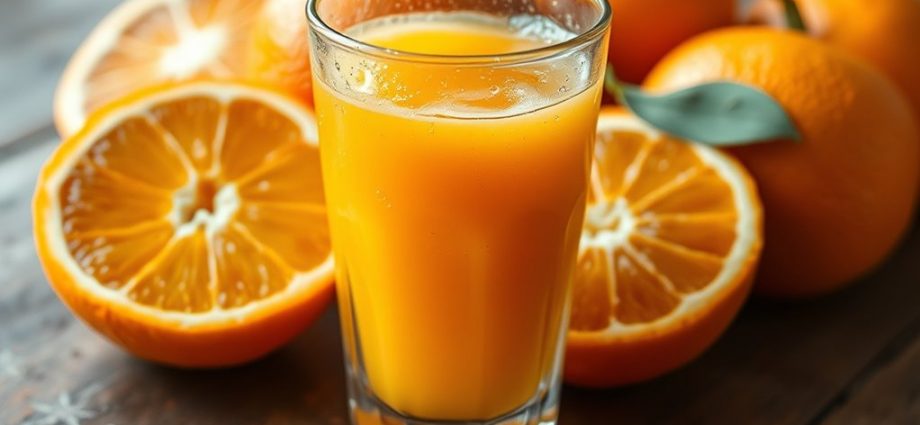
When you drink fresh orange juice, you’re consuming liquid directly extracted from carefully handled oranges, preserving its natural color, flavor, and essential nutrients like vitamin C. The juice usually undergoes gentle pasteurization and filtration to maintain quality and safety, while pulp levels can be adjusted to suit your preference. The process begins with selecting and cleaning high-quality fruit, ensuring every drop is fresh and nutritious. There’s much more about how this juice retains its quality and taste.
Fresh orange juice is the liquid extracted directly from oranges by squeezing or reaming, usually without adding water, sugar, or preservatives. When you see a label marked “100% orange juice,” it means no extra ingredients besides the natural juice exist in the product. This juice preserves the orange’s natural color, flavor, and nutritional constituents, including essential vitamin C, folate, and potassium. You can find fresh orange juice with varying pulp contents—smooth if low pulp is preferred, or pulpy if you like some texture. Oranges themselves are a low calorie, highly nutritious citrus fruit, contributing important health benefits.
Fresh orange juice offers pure, natural flavor packed with vitamin C and potassium, available smooth or pulpy.
Commercially, “fresh” often means juice that’s been pasteurized, refrigerated, and meant for consumption within a short period, rather than juice squeezed on demand. Orange processing plants are typically located near fruit-growing areas to ensure quick processing after harvest, maintaining the freshness and quality of the juice (strategic plant location).
The raw material for fresh orange juice primarily comes from specific varieties like Valencia and Hamlin. These types are favored due to their high juice yield and balanced sugar-acid profile. You’ll notice oranges are hand-harvested mainly around early November when they’re still slightly green. This timing guarantees proper ripeness and maximal juice content.
Before processing, every orange undergoes inspection to discard any damaged fruit, since bruising or punctures can lead to internal degradation. Typically, large trucks deliver batches of 35,000 to 40,000 pounds of carefully sorted and graded oranges to processing facilities. Key quality parameters such as soluble solids measured in degrees Brix, acidity levels, and sugar-acid ratio are analyzed before juicing to maintain consistency between batches.
Once arrived at the plant, oranges pass through a specialized washing system that resembles a car wash. Here, soapy or alkaline water with rotating nylon brushes removes dirt, pesticides, and surface contaminants. Following washing, fresh water rinses the fruit before dryers use air jets to eliminate residual moisture.
The oranges then undergo presorting and grading where unsuitable fruits are removed based on size, color, and surface defects. Mechanical size sorting ensures uniformity of the fruit entering the juicing stage.
Juicing involves mechanical extractors that rupture the peel and squeeze the oranges. These extractors function like metal combs pressing with great force to break the fruit and release juice while simultaneously eliminating seeds and the bitter white pith layer called albedo.
Another type, rotary press extractors, cut oranges in half and press out juice between rotating cylinders, capturing essential oils from the peel during extraction. The juice then undergoes filtration to separate out any remaining seeds, peel bits, and pith. Around 13 to 15 oranges are necessary to produce one liter of juice, depending on the variety and juiciness.
Finally, the juice enters filtration tanks designed to control the pulp content. Through adjustable filtering, you can have juice that’s nearly pulp-free or retain a pulpy texture by using coarser filters.
The separated pulp is sometimes collected for blending back or other uses. This precise management of pulp allows producers to meet different consumer preferences while preserving the integrity of fresh orange juice’s natural appeal.
Conclusion
When you drink fresh orange juice, you’re getting a natural source of vitamin C, antioxidants, and essential nutrients without additives. For example, a study on adults showed that consuming fresh orange juice daily improved immune function and reduced oxidative stress. By choosing fresh juice over processed options, you guarantee maximum nutrient retention and health benefits. So, next time you want a rejuvenating boost, opt for freshly squeezed orange juice to nourish your body effectively.
Comments are closed, but trackbacks and pingbacks are open.