
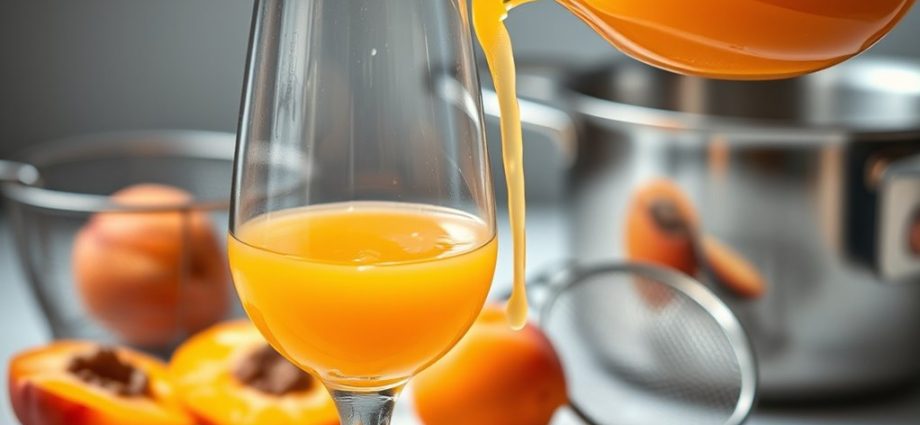
Fruit nectar is a beverage you’ll find positioned between 100% juice and fruit drinks, containing 25-50% fruit content depending on the variety. Manufacturers create it by diluting fruit juice or puree with water, then adding sweeteners like sugar or honey (up to 20% by weight) to balance acidity. The mixture undergoes pasteurization for safety and shelf stability, with producers often restoring natural aromatic compounds lost during processing. Understanding these regulatory standards and production methods reveals why nectar offers distinct advantages for specific fruits and consumer preferences.
While many consumers reach for 100% fruit juice expecting pure fruit content, fruit nectar occupies a distinct category in the beverage market with its own composition standards and production requirements. Fruit nectar is a beverage manufactured by combining water with fruit juice, concentrated fruit juice, fruit purees, or their concentrates.
Fruit nectar combines water with fruit juice or puree, creating a distinct beverage category with specific composition standards separate from pure juice.
You’ll find it differs fundamentally from pure fruit juice through its lower fruit content, which varies based on fruit type and regulatory frameworks governing each market. Legal standards establish minimum fruit content requirements that typically range from 25% to 50%, determined by the fruit’s natural acidity and pulp characteristics.
When you examine blackcurrants and similar acidic fruits, regulations require at least 25–50% fruit content, while apples and oranges must contain a minimum of 50%. Fruits with substantial pulp content, such as mangoes, require only 25% minimum fruit content. These thresholds guarantee product quality and align with consumer expectations, though manufacturers often exceed these minimums to enhance taste profiles.
The composition extends beyond fruit and water to include sweeteners that adjust palatability. You’ll find added sugar, honey, syrup, or authorized sweeteners incorporated up to approximately 20% maximum by weight. This addition proves particularly valuable for fruits with naturally high acidity levels, balancing tartness with acceptable sweetness.
Additionally, manufacturers can restore aromatic substances, volatile flavor components, pulp, and cells naturally derived from the same fruit to enhance flavor and texture integrity. The volatile compounds enhance the beverage’s aromatic profile and contribute to consumer appeal. Production begins with sourcing fruit juice or puree, either fresh-pressed or reconstituted from concentrate.
You’ll observe that water is then added to dilute the juice to required fruit content levels while maintaining nutritional value and flavor characteristics. Sweeteners are incorporated as needed to balance acidity profiles and complement naturally occurring fruit sugars including sucrose, glucose, and fructose. The mixture undergoes pasteurization or sterilization processes critical for upholding microbiological safety and shelf stability, preventing unwanted fermentation despite the product’s inherent fermentability.
Specialized ingredients may be added depending on fruit variety. Grape nectars can include salts of tartaric acid, while tomato nectars may contain salt, spices, and aromatic herbs to enhance flavor complexity. Physical methods restore flavor components extracted during processing, maintaining what you’d recognize as natural taste profiles without artificial colorings or preservatives in quality formulations.
Final production stages involve precise mixing, flavor restoration when necessary, and filling into containers under strictly controlled hygienic conditions. You must recognize that fruit nectar represents an unfermented but fermentable product, meaning microbial fermentation remains possible under conducive conditions without proper preservation. To extend shelf life, manufacturers may incorporate bacterial control agents that maintain product quality during storage.
When comparing beverage categories, you’ll distinguish fruit nectar from 100% fruit juice through its permitted water and sweetener additions and lower fruit content. Fruit juice drinks contain even less fruit—typically 6% to 30%—positioning nectar as an intermediate category.
Regulatory compliance mandates clear labeling, requiring declaration of all added ingredients per food law requirements, allowing you to make informed purchasing decisions based on transparent composition information.
Conclusion
You’ve now got the inside scoop on fruit nectar—it’s not just juice with a fancy label. You’ve learned that it’s a carefully formulated beverage containing 25-99% fruit pulp, water, sweeteners, and acids, processed through specific homogenization and pasteurization protocols. The standardized production methods guarantee you’re getting a consistent product that maximizes fruit utilization while delivering specific viscosity and nutritional parameters. Understanding these technical distinctions helps you make informed beverage choices based on actual composition data.
Comments are closed, but trackbacks and pingbacks are open.