
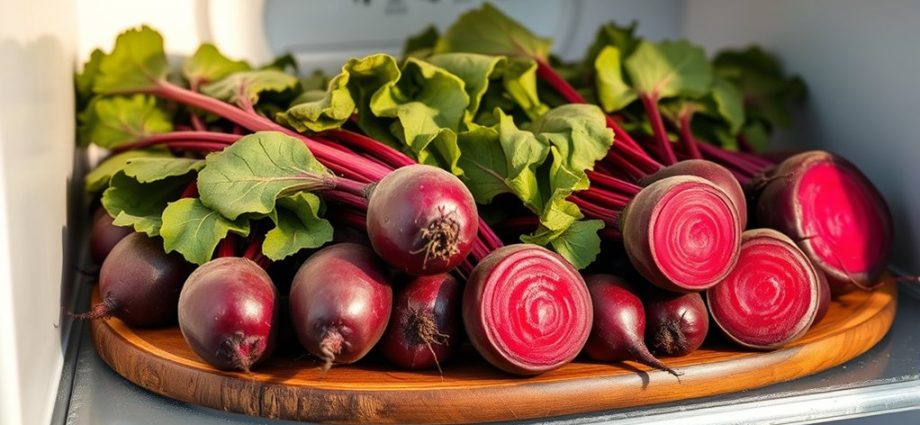
You can keep raw beets fresh in your fridge for about 14 days by storing them at 32–40°F with high humidity around 90–95%. Cut off beet greens, leave a half-inch stem, and avoid washing before storage to reduce moisture loss and decay. Store beets in sealed plastic bags with air removed, placed in a single layer to prevent bruising. Cooked beets last up to 5 days when cooled quickly in airtight containers. For detailed steps on maximizing beet longevity and spotting spoilage, keep exploring these guidelines.
While raw beets can last about 14 days in your refrigerator when stored properly, extending their freshness depends on precise conditions such as temperature, humidity, and handling. To enhance the shelf life of raw beets, you need to maintain a temperature range between 32 and 40 degrees Fahrenheit. This cool environment preserves their crispness and sweetness while slowing metabolic processes and microbial growth. Beets are a versatile vegetable that can be used in various recipes, making it worthwhile to keep them fresh as long as possible.
Properly stored raw beets last about 14 days at 32–40°F, preserving crispness and slowing spoilage.
Equally critical is sustaining high humidity levels around 90 to 95 percent, which prevents the beets from drying out and losing moisture. If you can replicate these conditions precisely, you’ll prolong the beets’ freshness considerably. Selecting beet varieties known as good keepers for winter can further improve storage success and longevity.
Before storing, you should gently cut off the beet greens, leaving about a half inch of the stem attached. This practice reduces moisture loss and limits the risk of decay compared to removing the root end or leaving the greens intact. The greens draw moisture from the roots and can accelerate spoilage, so eliminating most of the leaves is essential.
Avoid washing your beets before storage; moisture encourages rot, so you should instead rub off soil residues gently without adding water. Choosing similar-sized beets also helps create a uniform microenvironment during storage, enhancing consistent cooling rates and reducing the chance of premature spoilage in smaller or bruised roots.
When you place beets in the refrigerator, put them in sealed plastic bags with as much air removed as possible. Using gallon-sized freezer bags and pressing out the air minimizes moisture loss and prevents exposure to oxygen, which can degrade the beets over time.
Spread the beets out in a single layer within the bag or storage container to prevent bruising, which invites decay. Regularly inspecting your stored beets every month allows you to identify early signs of spoilage, so you can remove compromised roots immediately and prevent the spread of decay.
If you want to extend beet freshness beyond the typical two-week window, more specialized storage options are available. In near-ideal circumstances, vacuum-sealed beets can last up to five months, although this usually requires refrigeration with tightly controlled temperature and humidity.
Alternatives include storing beets in moist sand or cool root cellars, where ambient moisture preserves them for several months. Root storage bins lined with a damp medium also offer a controlled environment for longer preservation. However, all these methods demand consistent monitoring to eliminate any beets showing soft spots, mold, or discoloration promptly.
Cooked beets have a distinctly shorter shelf life in the fridge, maintaining their quality for up to five days only. To store cooked beets effectively, place them in airtight containers and cool them rapidly before refrigeration, which inhibits bacterial proliferation. Proper labeling helps you track freshness and avoid accidental spoilage.
You must avoid leaving cooked beets at room temperature for longer than two hours to reduce food safety risks.
To determine if beets have spoiled, look for wrinkling, mushy texture, foul odor, or visible mold. Slight superficial decay or fine root hairs can often be trimmed away without discarding the root.
However, excessive sliminess, yellowing greens, or sour smells signal you should discard the affected beets immediately. By adhering to these evidence-based storage and handling criteria, you maintain your beets’ superior freshness, taste, and nutritional value for as long as possible in your fridge.
Conclusion
Think of storing beets in your fridge like pausing a movie—proper conditions keep the plot fresh and vibrant. When stored correctly in breathable bags or containers, unwashed beets can last up to 3-4 weeks, while cooked beets hold their quality for about 3-5 days. Remember, maintaining consistent cold temperatures around 32-40°F and avoiding moisture are key to extending freshness and preserving nutrient integrity. Proper storage guarantees you get the most from every beet.