
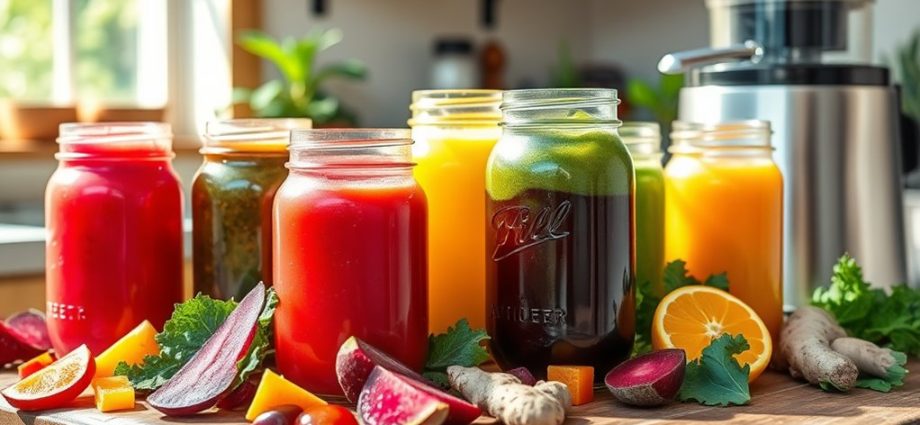
A juice cleanse at home can offer quick weight loss and potential health benefits, but be aware of the possible downsides. You’ll miss out on fiber, which can hurt your gut health, and you might experience fatigue or irritability. Juice cleanses aren’t a magic detox solution since your liver and kidneys do that naturally. To maximize health benefits, consider a balanced approach post-cleanse. Want to know more about effectively doing a juice cleanse?
If you’re considering a juice cleanse, it’s vital to understand both its benefits and drawbacks. Many people initiate juice cleanses for quick weight loss, which may indeed lead to considerable reductions in weight and Body Mass Index (BMI) within just three days. However, this initial weight loss primarily stems from water and energy store depletion rather than actual fat loss.
While some juices, like lemon juice, can lower postprandial blood glucose levels, the overall nutritional profile of juice cleanses raises concerns. Focusing on the gut microbiome, you may notice adverse effects primarily due to the absence of fiber in juices. A study indicates that juice-only diets considerably increase bacteria associated with inflammation and gut permeability. This can lead to decreased microbial diversity as beneficial species, such as Firmicutes, dwindle while inflammatory Proteobacteria increase during juicing. Additionally, juicing removes fiber, which negatively impacts microbiome health. Furthermore, detoxing through specific diets is a myth, as your liver and kidneys naturally eliminate toxins from your body.
Juice cleanses may lower blood glucose but can harm gut health by increasing inflammatory bacteria and reducing diversity.
Conversely, including whole foods along with juices shows milder changes in gut bacteria, highlighting the necessity of balanced nutrition during a cleanse. Juice cleanses do provide antioxidants that support immune function and might offer cardiovascular benefits, thanks to increased nitric oxide levels and decreased lipid oxidation markers. However, the evidence supporting these benefits requires more rigorous research.
Additionally, juice cleanses can lead to fatigue, dizziness, and irritability. These side effects are often due to insufficient caloric intake and nutrient deficiency, as many juice diets provide merely 300 calories per day and a minimal amount of macronutrients. When it comes to hydration, juices might enhance your fluid intake, which could slightly aid kidney function, but they won’t dramatically improve detoxification or toxin removal.
It’s important to debunk the myth that juice cleanses detox your body. Your liver and kidneys naturally eliminate toxins, and there’s no scientific evidence suggesting that juice cleanses improve long-term health or expedite this process. For effective detoxification, proper nutrition rich in fiber from whole foods is your best bet.
After completing a juice cleanse, beware of the potential for overeating as the body’s craving for nutrients intensifies. This may lead to rapid weight regain. Additionally, individuals with chronic health conditions or those prone to health issues are generally advised against attempting juice-only diets due to the associated risks. Nutritional deficiencies and electrolyte imbalances can occur, particularly during extended juice fasts.
Conclusion
As you wrap up your juice cleanse journey, remember that the real transformation goes beyond just what’s in your glass. Much like a butterfly emerging from its cocoon, this experience can invigorate your body and refresh your mind. Embrace this newfound clarity and energy as a foundation for healthier choices ahead. With each sip, you’ve not only cleansed your system but also taken a step toward a more vibrant you. So, go out and spread your wings!
Comments are closed, but trackbacks and pingbacks are open.