
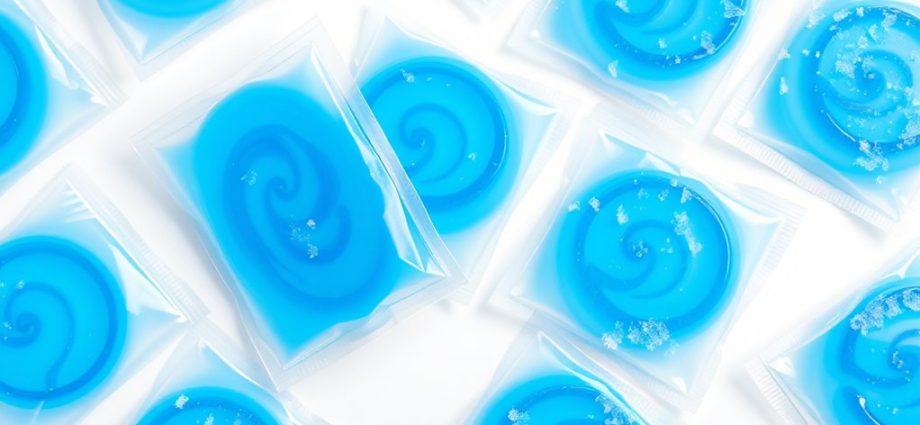
Ice gel packs are versatile cold therapy tools that help relieve pain and reduce swelling. They consist of water mixed with thickening agents, which create a gel-like consistency. When applied, they maintain a cold temperature, absorbing heat from your body, promoting healing through vasoconstriction and reduced cellular metabolism. This numbs the area and diminishes pain signals. Understanding their construction and benefits can enhance your recovery methods considerably—there’s more to learn about their therapeutic advantages and usage.
Ice gel packs have become vital tools for pain relief and injury management. These packs are primarily composed of water mixed with thickening agents like silica gel or hydroxyethyl cellulose, creating a gel-like consistency. Sometimes, a humectant like propylene glycol is added. This ingredient controls the freezing properties of the pack and guarantees it remains pliable, even at low temperatures. The gel mixture is contained within a durable, flexible plastic pouch that’s designed to resist punctures and withstand temperature fluctuations.
Ice gel packs are essential for pain relief, combining water and thickening agents for effective injury management.
Instant ice packs work differently. They contain separate compartments: one with water and the other with a chemical reactant, frequently ammonium nitrate, urea, or calcium ammonium nitrate. When you break the barrier inside the pack, it mixes the reactive components, triggering an endothermic chemical reaction that rapidly produces cold. This reaction absorbs heat from the environment, effectively lowering the temperature inside the pack to near 0°C for about 10 to 15 minutes. The process relies on bond-breaking within the chemicals, requiring heat input, and results in a significant cooling sensation fundamental for pain relief. Instant ice packs take advantage of an endothermic reaction to achieve rapid cooling, making them especially effective for immediate treatment.
In contrast, gel packs without instant reactions maintain their cold temperature from the gel’s high water content, which has a high latent heat of fusion. This property allows the water within the gel to absorb considerable heat as it melts, extending the cooling effect. As the gel heats up by absorbing heat from your body, it gradually melts, offering prolonged cold therapy. The semisolid nature of the gel guarantees that the pack conforms closely to your body’s contours, improving contact surface area and heat transfer efficiency.
Cooling occurs via conduction as heat flows from the warmer injured tissue to the colder gel pack, effectively lowering local temperature. This sustained cycle of heat absorption from the body and phase shift in the gel fosters therapeutic cooling. One crucial aspect of this process is that it facilitates muscle relaxation by reducing spasms and contractions, ultimately contributing to overall comfort.
Cooling through ice gel packs offers numerous therapeutic benefits. To begin with, it induces blood vessel constriction, or vasoconstriction, which limits blood flow to the injury site, thereby reducing bleeding and swelling. With less blood flow, there’s a decrease in fluid leakage that typically causes inflammation.
Cooling additionally slows cellular metabolism in the injured area, potentially minimizing secondary tissue damage. The lower temperature further decreases blood vessel dilation, mitigating edema formation. Collectively, these effects curtail swelling, pain, and tissue damage during the significant early stages of injury.
Moreover, ice gel packs provide significant pain relief. They numb the affected area by lowering nerve conduction velocity, which diminishes the transmission of pain signals to your brain. The combination of reduced blood flow and altered nerve activity allows for effective pain management, making ice gel packs an indispensable resource for immediate injury treatment.
Conclusion
In conclusion, ice gel packs are versatile tools that provide effective cooling and soothing relief for injuries or inflammation. Whether you’re nursing a sprain after a morning run or keeping your lunch fresh during a picnic, their convenience is hard to beat. Coincidentally, as you explore their various uses, you might just discover the perfect companion for your next adventure. So, don’t underestimate these handy packs—they’re more than just cold storage; they’re your ally in comfort!
Comments are closed, but trackbacks and pingbacks are open.