
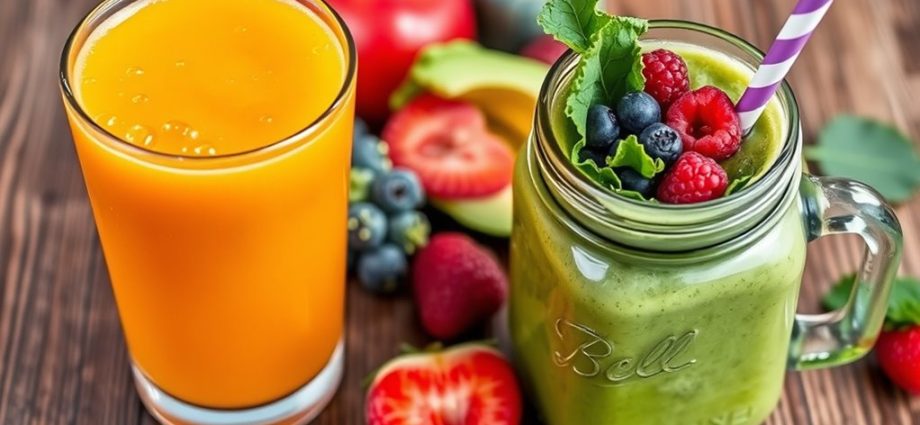
Juice and smoothies differ considerably in their nutritional benefits. Smoothies retain fiber, promoting gut health and satiety, while juices often lack fiber, leading to rapid sugar absorption and potential blood sugar spikes. Smoothies are typically higher in calories, offering more protein and healthy fats, which keep you full longer. Juices, on the other hand, are easier to consume quickly and can provide a quick nutrient boost. If you want to explore their advantages further, keep going!
When choosing between juice and smoothies, it’s essential to understand how each option affects your health and wellness. One of the primary differences lies in their fiber content. Smoothies incorporate whole fruits and vegetables, preserving both soluble and insoluble fiber. This fiber is important for gut health, promoting regularity, and enhancing feelings of fullness, which is beneficial for weight management. Furthermore, consuming whole food sources in smoothies maximizes their nutritional benefits.
When deciding between juice and smoothies, remember that smoothies retain vital fiber for gut health and satiety.
In contrast, juicing typically removes most insoluble fiber, leaving you with a drink that’s easier to digest but less filling. Without the insoluble fiber, juice may not support gut microbiome diversity as effectively as smoothies do.
The nutrient and antioxidant density also varies considerably between the two. Smoothies tend to have a higher antioxidant content because blending retains fiber-bound antioxidants that are often lost during juicing. While juices provide a quick, concentrated burst of vitamins and minerals, this comes at the cost of losing some essential nutrients through heat processing and storage.
When you make your smoothies at home, you’re likely to consume more nutrients as they retain the whole food content, sometimes with added ingredients like nuts or seeds that further enhance nutrient diversity. Juices usually lack some macronutrients, particularly protein and fat, that smoothies can provide when additional ingredients are included.
Caloric content is another key difference that influences your choice. Smoothies generally contain more calories than juices, especially if you add items like yogurt, milk, or protein powders. For instance, while a typical cup of juice might’ve around 110 calories, a similar serving of smoothie could exceed 200 calories. The impact of added ingredients often contributes to this higher caloric content, which can enhance satiety and overall nutrient intake.
This higher caloric content often leads to longer-lasting satiety, making smoothies suitable meal replacements. Conversely, juices tend to be lower in calories but can lead to rapid sugar absorption, resulting in quick energy spikes followed by crashes, which may leave you feeling hungrier sooner.
It’s also important to reflect on how each drink affects your blood sugar and digestion. Juices can cause faster sugar absorption due to their low fiber content, leading to blood sugar spikes and possibly causing gastrointestinal discomfort in some people. Smoothies, with their fiber, release sugars more slowly into the bloodstream, helping to maintain stable blood sugar levels.
This slower digestion allows smoothies to promote feelings of fullness and prevent overeating, making them a safer choice for individuals managing blood sugar levels or diabetes.
Finally, the texture and satiety of each drink markedly differ. Smoothies boast a thicker, more viscous texture that comes from blended solids, making them more satisfying and suitable as a snack or meal substitute. On the other hand, juices are thinner and easier to consume quickly, often just serving as a hydration source or a quick nutrient fix.
Their lack of fiber bulk means juices aren’t as effective at curbing hunger for extended periods, which might lead to overconsumption later. Understanding these differences enables you to make informed choices that align with your health goals.
Conclusion
In the end, choosing between juice and smoothies depends on your nutritional goals. Juice, like a invigorating summer rain, offers quick hydration and a burst of vitamins, while smoothies serve as a hearty meal, blending fiber and nutrients into a satisfying texture. Both have their place in a balanced diet. So, whether you’re sipping a vibrant juice or indulging in a creamy smoothie, you’re adding a splash of health to your day!
Comments are closed, but trackbacks and pingbacks are open.