

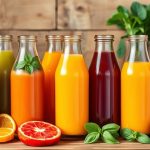
Juice water is a invigorating drink made by mixing fruit juice or concentrate with water, usually containing less than 100% juice. It often has added sweeteners, flavorings, or other ingredients. To make it, simply dilute your choice of fruit juice or concentrate with water in your preferred ratio. You can also experiment with different fruit combinations for variety. If you want to explore more about juice water‘s nutritional aspects and production methods, keep going!
Juice water, often blending the invigorating taste of fruit with a lighter profile, is a diluted beverage made by mixing fruit juice or concentrate with water. It typically contains less than 100% juice content and can be categorized into various types like juice drinks, juice cocktails, or nectars based on the concentration of juice. You’ll find that juice water may often have added ingredients such as sugars, acids like citric acid, and natural or artificial flavorings to enhance the overall taste.
The juice itself can come from freshly extracted juice or reconstituted concentrate, which is filtered and diluted to meet the specific concentration desired. Juice may be turbid or clear, concentrated, and reconstituted to achieve the preferred strength. Creating juice water is a straightforward process. Start by choosing fresh fruits or by using juice concentrate. Juice extraction involves mechanically pressing or using extraction methods to obtain juice from ripe fruit. If you’re working with dense fruits, like bananas, soaking them in water can effectively pull out sugars and acids necessary for a balanced flavor.
Juice water can be crafted using fresh fruit or reconstituted concentrate, providing a refreshing and flavorful beverage option.
After extracting the juice, you can dilute it with water to achieve the preferred strength. The dilution ratios vary depending on the type of product you aim for; for example, nectars require a minimum juice content of 25-50%, while juice cocktails may only contain between 10-20%. While preparing juice water, you might consider filtering to remove pulp. This makes it visually appealing, often resulting in a clearer beverage.
Additionally, pasteurization can increase the shelf life of your juice water. This step is crucial if you plan to sell your product, as it helps guarantee safety and compliance with FDA guidelines. Under these regulations, juice water products must clearly state the percentage of juice content and any added sugars or sweeteners on the label, promoting transparency for consumers. According to studies, fruit juice provides essential vitamins and minerals that can contribute to a healthy diet, but juice water may lack similar nutrient density due to the dilution process.
Nutritionally, juice water tends to have lower nutrient density than pure juice because of the dilution process and the presence of additives. While it’s invigorating, you won’t get the same vitamin and mineral benefits you’d from 100% fruit juice. Be mindful of what you add; sometimes, sweeteners are necessary for taste, whether they’re natural sugars or low-calorie alternatives like acesulfame potassium. These decisions affect both the flavor and the calorie content of your final product.
When making juice water, you’ve got the creative freedom to experiment with various fruit combinations or even create blends of pure juices. Adding natural flavors or even permitted colorants can enhance the appeal of your product. Just remember to keep an eye on the labeling laws, promoting your consumers know exactly what they’re drinking.
Fundamentally, juice water is a versatile, accessible way to enjoy the taste of fruit, making it a popular choice for those looking for a lighter alternative to traditional juices.
Conclusion
To sum it up, if you ever find yourself craving a beverage that’s both watery and juice-like, juice water is your answer! Just imagine the culinary revolution when you serve it at your next gathering—guests might marvel at your groundbreaking combination of, say, orange juice and plain water. Who needs cocktails when you’ve got this brilliantly simple concoction? So go ahead, embrace the phenomenon of juice water, and prepare to be the life of the hydration party! Cheers!
Comments are closed, but trackbacks and pingbacks are open.