
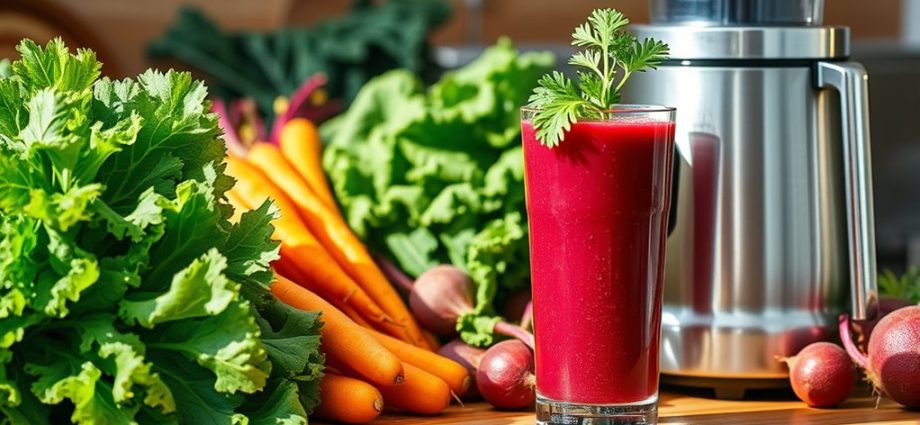
To make organic vegetable juice at home, start by selecting fresh, seasonal, certified organic veggies like kale, cucumber, and celery. Wash everything thoroughly and cut them into manageable pieces. Use a masticating or centrifugal juicer for best extraction, or blend in a high-powered blender with some water. Strain the mixture to remove pulp. For a balance of flavors, add fruits like apple or lemon. Get ready to explore unique combinations for delicious, nutrient-packed juices!
Making organic vegetable juice can be a rewarding way to boost your nutrient intake and enjoy fresh flavors, especially when you start with high-quality, certified organic produce. When selecting vegetables, it’s essential to pick those free from pesticide residues. Opt for certified organic varieties like tomatoes, carrots, celery, beets, kale, spinach, cucumber, bell peppers, and ginger. Seasonal, locally grown options not only guarantee peak freshness but also enhance flavor and nutrient density.
Before juicing, don’t skip the washing step; run all produce under cool water and scrub firm-skinned vegetables with a brush to eliminate any dirt or contaminants. If your organic veggies are well-washed, you can even keep the skins and peels on. This practice boosts the fiber and phytonutrient content in your juice, making it even healthier. Be sure to avoid any bruised, moldy, or spoiled produce as well, trimming away damaged areas to maintain the quality and safety of your juice.
Prioritize washing your produce thoroughly; keeping organic skins boosts nutritional content in your juice. Always discard any spoiled vegetables.
When it comes to equipment, you’ll want a good masticating or centrifugal juicer for ideal juice extraction with minimal heat and oxidation. If you don’t have a juicer, a high-powered blender works just as well; simply combine it with a fine mesh strainer or nut milk bag to separate the pulp from the juice. To catch and store your fresh concoctions, use glass pitchers, jars, or BPA-free containers that won’t leach harmful chemicals. Additional prep tools like cutting boards, sharp knives, peelers, and produce brushes will make the process smoother.
For a well-balanced juice, aim for a ratio of 70-80% vegetables and 20-30% fruits. Ingredients like cucumber, celery, kale, and spinach serve as a nutritious base, while a splash of fruit like apple, lemon, or grapefruit brings a touch of natural sweetness and acidity to your drink. A classic savory option could include tomatoes, carrots, and celery, mimicking the taste of commercial V8-style juices. Alternatively, mix beets, carrots, and apples for a sweet, earthy blend rich in nitrates and antioxidants. Green juice lovers may enjoy combinations that include cucumber, celery, kale, spinach, apple, lemon, and ginger, giving you a rejuvenating nutrient-packed beverage that provides an extra dose of plant-based nutrition.
Before you begin juicing, wash all ingredients under running water to remove any residual contaminants. Trim away any unwanted parts, and remember that you can leave organic skins on unless they’re tough or waxed. Cut your vegetables and fruits into manageable pieces for your juicer or blender. If you’re using a blender, adding about one cup of water can help you achieve a smooth puree that’s ready for straining. Pre-chopping and storing veggies in airtight containers can save you time for daily juicing.
When you’re ready to juice, start by feeding prepared vegetables into the juicer in the recommended order, typically putting softer greens in first. If using a blender, toss in your veggies, fruits, and a little water before blending it all until smooth, mimicking a thick smoothie texture. Don’t forget to strain your mixture through a fine mesh strainer to filter out any remaining pulp. Enjoy your nutritious, homemade organic vegetable juice!
Conclusion
Now that you’ve crafted your vibrant organic vegetable juice, watch the colors swirl like a painter’s palette in your glass. Taking that first invigorating sip, you can savor the garden’s essence—earthy beets, crisp cucumbers, and zingy ginger dancing on your taste buds. Remember, this nutritious elixir not only nurtures your body but also grounds you, connecting you to the earth with every gulp. So, embrace this simple ritual and let the goodness flow into your daily routine.
Comments are closed, but trackbacks and pingbacks are open.