
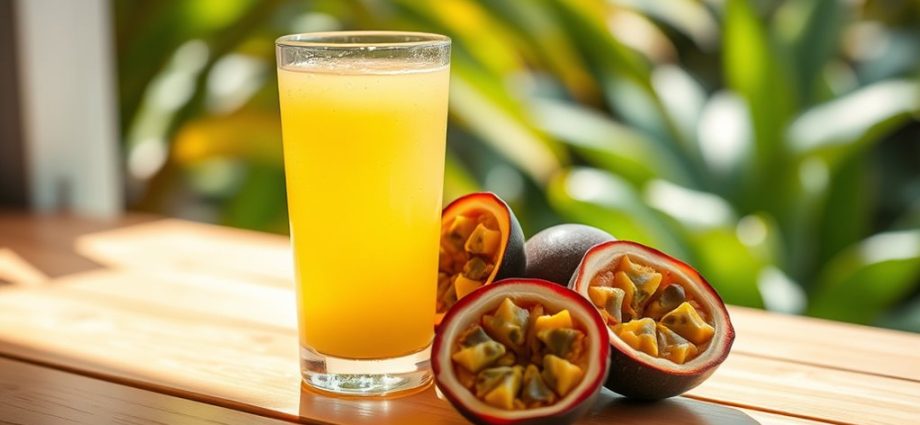
You drink passion fruit juice as a bright, tropical beverage made by blending the aromatic, seed-filled pulp of Passiflora edulis with water, then straining or keeping the crunchy seeds. It’s naturally sweet-tart, like citrus with melon notes, and provides vitamin C, vitamin A, B vitamins, potassium, magnesium, and polyphenol antioxidants that support immunity, heart health, and gut function. Enjoy it alone or in smoothies and desserts, and you’ll uncover even more ways it benefits health.
Although it tastes like an indulgent tropical treat, passion fruit juice is a nutrient-dense beverage made from the aromatic, seed-filled pulp of Passiflora edulis, a South American fruit long cultivated by Indigenous communities. When you drink it, you’re fundamentally consuming the extracted liquid and suspended pulp from the fruit’s soft interior, while the tough outer rind stays behind. The juice delivers a balanced sweet–tart profile, often described as citrusy with subtle melon-like notes, which makes it appealing both on its own and as a base for blends. The plant itself grows on a flowering vine whose intricate blossoms inspired its name and symbolic association with the Passion of Christ.
From a nutritional perspective, you get mostly carbohydrates with minimal fat and protein, but the micronutrient density is where passion fruit juice stands out. The whole fruits themselves are typically round or oval and about 1.5 to 3 inches (3.81 to 7.62 cm) wide, enclosing the pulpy seed mass that is used for juice. It supplies meaningful amounts of vitamins A and C, several B vitamins including niacin, and minerals such as potassium, magnesium, phosphorus, and iron. Approximately one hundred grams of the fruit can provide about a third of your daily vitamin C needs, supporting collagen synthesis, immune defense, and enhanced dietary iron absorption. The juice also contributes dietary fiber, which helps modulate gastrointestinal transit time, supports a healthy gut microbiota, and promotes regularity.
Beyond vitamins and minerals, you take in a wide array of phytochemicals. Passion fruit juice contains polyphenols and flavonoids such as luteolin, apigenin, and quercetin derivatives, compounds known for their antioxidant and anti-inflammatory potential. These molecules help neutralize reactive oxygen species and may lower oxidative stress, a process linked to cardiovascular disease, neurodegeneration, and metabolic disorders.
The volatile fraction of the juice—rich in esters, aldehydes, ketones, and alcohols—does more than create aroma; it also contributes additional antioxidant activity.
These constituents translate into tangible health effects when you integrate the juice into a balanced dietary pattern. Vitamin C and polyphenols support immune competence and may reduce infection risk, while also improving non-heme iron absorption from plant foods. Potassium and magnesium assist with vascular tone, blood pressure regulation, and cardiac rhythm, making the beverage a heart-supportive option when you moderate added sugars.
The fiber fraction, even after straining, can aid satiety and stool bulk, which helps maintain bowel regularity and gut integrity. Some bioactive components may also enhance cerebral and peripheral blood flow, offering potential support for cognitive function and nervous system resilience, although human data remain limited.
In everyday practice, you’ll most often prepare passion fruit juice by scooping the pulp into a blender, adding water, and adjusting sweetness, sometimes with a squeeze of lime, before straining out the seeds. You can drink it straight, mix it with other tropical juices like pineapple, mango, or papaya, or incorporate it into smoothies, yogurts, jellies, syrups, sauces, desserts, and baked goods.
When you treat it as a flavorful, nutrient-dense component rather than a sugar-heavy drink, passion fruit juice becomes a practical way to diversify your fruit intake, increase antioxidant exposure, and support cardiometabolic and digestive health.
Conclusion
When you pour a glass of passion fruit juice, you’re not just quenching thirst; you’re supporting cardiovascular health, stabilizing blood sugar, and bolstering immunity. You choose polyphenols over soda, soluble fiber over empty calories, micronutrients over marketing hype. By savoring its tart-sweet flavor, you hydrate wisely, nourish your gut, and protect your cells. Let every sip remind you: small, evidence-based choices today can shape your metabolic health, mood, and longevity tomorrow, in ways you’ll feel.
Comments are closed, but trackbacks and pingbacks are open.