
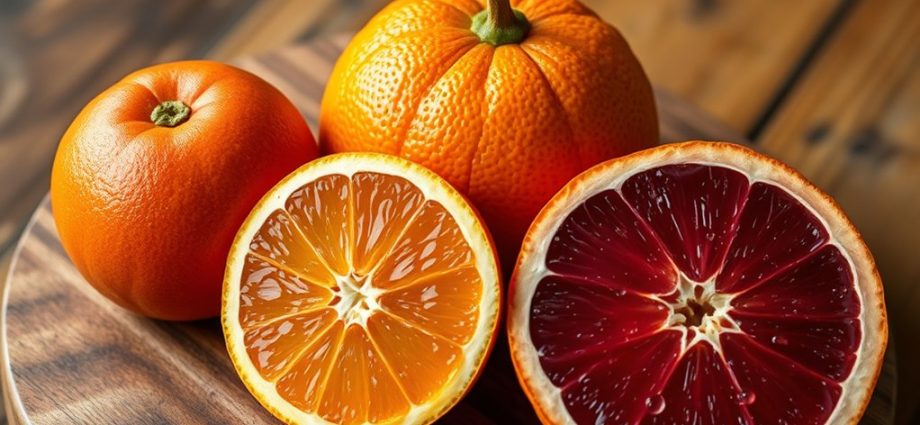
You’ll get highest yield and balanced flavor from Valencias, very sweet cloudier juice from Navels best for immediate consumption, and antioxidant-rich Cara Caras with a pink hue and low acidity that blend well. Valencias have thin membranes and high juice extraction; Navels are seedless and fiber-rich; Cara Caras pack vitamin C and carotenoids. Store chilled and use within recommended windows for quality. Keep going to see detailed tips and storage timelines for peak freshness now.
Valencia Oranges
Although harvested late in the season, Valencia oranges deliver high juice yield and a reliably balanced sweet-tart flavor, making them ideal for both commercial and home juicing.
You’ll find Valencias produce abundant, bright orange juice with few seeds, facilitating efficient extraction and minimal filtration.
Fruit size ranges from seven to ten centimeters and thin-to-moderate peel yield high juice-to-mass ratios; flesh is tender, divided into ten to twelve segments with thin membranes, optimizing release. Juice shows color stability and resists rapid souring under refrigeration, so you can store pressed juice with preserved flavor.
Because peel often clings tightly and can be leathery, you’ll prefer them for juicing rather than fresh eating. Their nutritional profile supplies vitamin C while extending fresh juice availability into summer months. They also provide important minerals such as potassium.
Navel Oranges
When you juice Navel oranges, you get a very sweet, floral-tinted juice from seedless, meaty fruit that are typically 6–10 cm across with moderately thick, easy-to-peel rinds.
You’ll extract robust, naturally sweet juice with balanced acidity; consume it same day to avoid bitterness from limonin and aroma loss. Use a citrus reamer or hand pressure for efficient yield; seedless flesh and 10–12 segments simplify processing.
Because pectic enzyme activity is weak, juice clears slowly and may appear cloudy despite good initial aroma. Cold storage slows degradation but can’t prevent flavor decline within 24–72 hours; freeze for retention.
Cloudy yet fragrant—refrigerate for 24–72 hours; freeze to preserve peak flavor
They are also high in fiber, contributing to daily nutrient needs.
- 6–10 cm diameter, globular to slightly oval
- Seedless, 10–12 meaty segments; easy to peel
- Very sweet, floral-tinted juice; balanced acidity
- Best consumed fresh; stores 24–72 hours refrigerated
Cara Cara Oranges
Because Cara Cara oranges pack unusually high levels of vitamin C (about 150% of the daily value per medium fruit) and carotenoids like lycopene and beta‑carotene, juicing them gives you a nutrient‑dense, antioxidant‑rich beverage with a distinctive pinkish hue.
You’ll obtain substantial vitamin A (≈30% DV), potassium, and residual soluble fiber if you include pulp, supporting vision, cardiovascular function, and digestion. Lycopene and beta‑carotene provide anti‑inflammatory and antioxidant effects that may reduce oxidative damage.
Flavor is sweet and low‑acid, so juice is naturally palatable and mixes well with citrus or berry juices to enhance complexity. Seedless fruit simplifies processing.
Use peak‑season (Dec–Apr) produce and consume juice promptly to maximize nutrient retention and sensory quality. You can also employ juice in dressings, marinades, and cocktails regularly.
Conclusion
You’ll find Valencia, Navel, and Cara Cara each optimize juicing outcomes: Valencia delivers high juice yield and balanced acidity, Navel offers sweetness and easy peeling, and Cara Cara provides lower acidity with berry-like notes. Use them according to desired sugar-acid ratio and pulp tolerance, and you’ll extract consistent, reproducible results. Think of them as calibrated instruments on your bench—each specimen yielding predictable data for flavorful, efficient juice production and maximized nutrient retention reliably each time.