
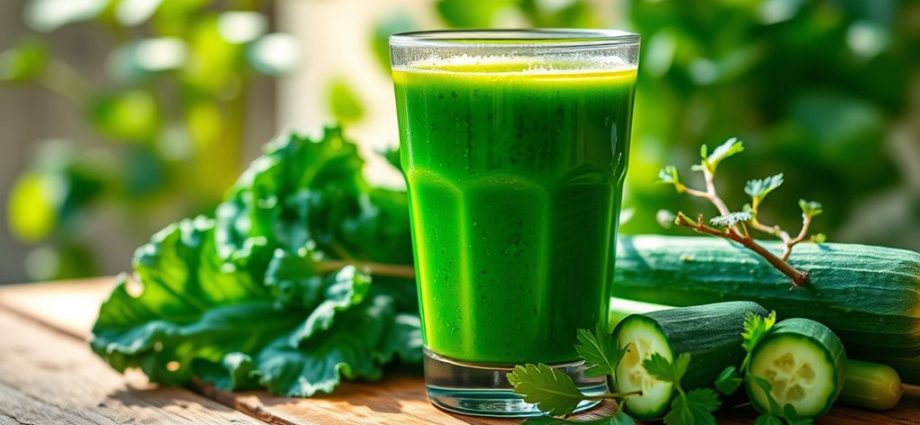
Green juice typically ranges from 50 to 217 calories per serving, depending on its ingredients and portion size. Most calories come from carbohydrates, with protein averaging around 2 grams. Low-calorie veggies like kale and cucumber keep counts down, while fruits like apples can spike sugars. Larger servings or concentrated juices may increase calories. Moderation is key to enjoying the benefits without overdoing it. Want to know more about what affects those numbers?
Green juice has gained popularity as an invigorating health drink, but understanding its calorie content is key to making informed dietary choices. Typically, you’ll find that a standard serving of green juice clocks in between 50 to 217 calories. This wide range largely depends on the recipe and portion size you choose. For instance, you’ll often see calorie counts of around 100 for a 240g serving, about 146 calories per cup, or roughly 135 calories in a 12 fl oz serving. The fat content is usually minimal, often under 1 gram, making the calorie count lean primarily towards carbohydrates.
When you explore the nutrient composition, carbohydrates take center stage, with many recipes deriving up to 89% of their calories from this macronutrient. The carbohydrate content often ranges between 20 to 32 grams per serving, driven mainly by the natural sugars present in the ingredients. While protein typically stands at around 2 grams per serving, its contribution to the overall calorie count remains low, making up about 7% or less of the total. Due to the juicing process, fiber is also minimal, usually falling under 1 gram per serving.
The specific ingredients you select can greatly influence the calorie count of your green juice. Vegetables like kale, spinach, cucumber, celery, and parsley contribute negligible calories. However, if you add fruits like green apples or mango nectar, you’re likely to increase both the calorie and sugar content. While lemon and lime juice can enhance flavor with few additional calories—generally under 60 per cup—other ingredients like avocado can greatly elevate the calorie count, reaching as much as 184 calories per cup. Additionally, a standard serving of green juice contains approximately 217 calories, which underscores the importance of portion control.
Serving size plays an essential role in determining your total caloric intake. Standard portions typically range from 8 fl oz (around 240 ml) to 12-16 fl oz, which influences the range of calories you might consume. Smaller servings may yield around 50 to 100 calories, while larger ones can push this figure considerably higher. Keep in mind that concentrated juices, which usually contain less water, also have a higher calorie density compared to more diluted options.
While green juice is low in fiber, it still provides the sugars without the satiety that comes from fibrous foods. This high sugar content, despite being low in overall calories, could influence blood sugar levels. Compared to other juices like grape or mango, green juice generally maintains a lower calorie profile. To guarantee balanced nutrition, integrating whole vegetables and fruits alongside your green juice is essential, helping you to maintain your fiber intake.
Lastly, consuming green juice in moderation is key. Juicing can concentrate compounds like oxalates, which might pose kidney health risks if consumed excessively. Balancing your intake can help you enjoy the benefits of green juice without compromising your overall dietary health.
Conclusion
In conclusion, while green juice can be a low-calorie option packed with nutrients, it’s essential to stay mindful of portion sizes and ingredients. On one hand, it can be a revitalizing way to boost your vitamin intake; on the other, certain recipes may add extra sugars that increase calorie counts. By balancing these factors, you can enjoy the health benefits of green juice without compromising your dietary goals. Remember, it’s all about making informed choices!
Comments are closed, but trackbacks and pingbacks are open.