
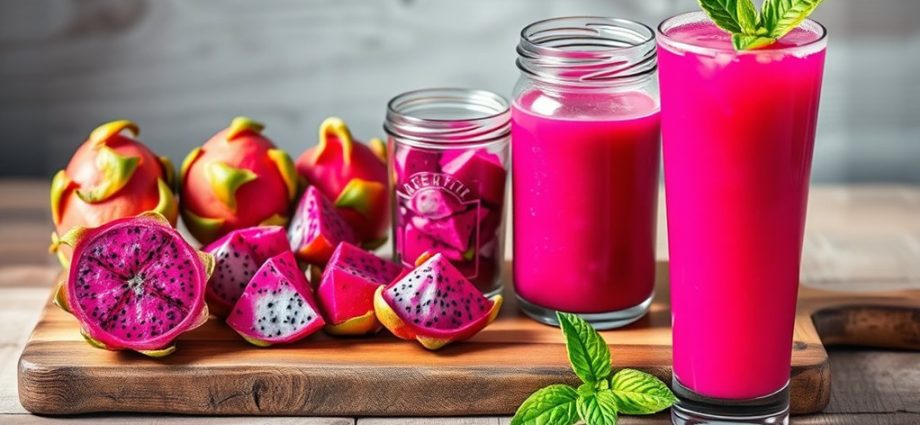
To make dragon fruit juice easily, start by selecting a ripe, vibrant fruit with firm, blemish-free skin. Peel and cut the flesh into chunks, then combine about 4 cups of dragon fruit with 6-8 cups of water or coconut water in a blender. Add a splash of lime or passion fruit juice for flavor, and blend until smooth. Strain the juice for a silky texture, chill, and serve over ice. Keep going to discover tips on enhancing sweetness, serving, and storage.
Selecting and Preparing the Dragon Fruit
To select the best dragon fruit for juice, start by looking for three key ripeness indicators: vibrant red or magenta skin that yields slightly to gentle pressure, a sweet fragrant aroma, and a size between 10 to 15 centimeters in diameter.
These signs confirm ideal ripeness, ensuring rich flavor and maximum juice yield. Choose fruit with intact, blemish-free skin to maintain freshness and juice clarity. The red-fleshed variety offers higher antioxidants, while white-fleshed types provide a milder taste but similar nutrients.
Avoid overly soft spots indicating overripeness or potential spoilage. Harvesting close to peak ripeness preserves vitamin C content and natural sugars, resulting in healthier, tastier juice. The dragon fruit is harvested close to ripe and does not continue ripening after being picked, so selecting at the right stage is essential.
Peeling and Cutting the Fruit
Once you’ve selected ripe dragon fruit, the next step is to peel and cut it properly to preserve its nutrients and prepare it for juicing.
Start by placing the fruit on a stable cutting board and slicing it lengthwise with a sharp knife to fully expose the flesh.
For peeling, scoop out the flesh with a large spoon or make a slit in the skin and gently peel it off. Dragon fruit is technically classified as a berry belonging to the cactus family, which contributes to its unique texture and nutritional profile.
Cutting the fruit into chunks or cubes after peeling facilitates smooth blending and nutrient retention.
Remember to stabilize the fruit to avoid injury and use gentle force since ripe dragon fruit is soft.
Wash your hands and utensils before and after to maintain hygiene and guarantee your dragon fruit juice remains fresh and healthful.
Choosing Additional Ingredients
How can you enhance the vibrant flavor of dragon fruit juice while keeping it healthful? Start by adding citrus like lime or lemon juice in moderation to brighten the taste without overpowering its delicate sweetness.
Passion fruit juice can add a sweet-tart complexity and natural electrolytes, enriching both flavor and nutrition. Consider natural sweeteners like honey or agave only if needed, based on the fruit’s ripeness and your preference for sugar content.
For extra antioxidant benefits and a revitalizing twist, add fresh mint or a small amount of ginger for warmth. Additional fruit juices like pineapple or apple can layer flavor and improve texture.
Select ingredients thoughtfully to balance flavor, nutrition, and your desired sweetness while maintaining the juice’s fresh and healthful profile.
Blending the Fruit and Liquids
Enhancing your dragon fruit juice with additional ingredients sets the stage for a flavorful blend, but the way you combine the fruit and liquids truly shapes the final taste and texture.
Start by peeling and chopping about 4 cups of fresh or frozen dragon fruit into coarse pieces. Use 6-8 cups of water or coconut water as your base liquid, or swap in non-dairy milks for creamier results.
Place the fruit and liquids in your blender, beginning on low speed to prevent overprocessing seeds. Blend until smooth and uniform, typically under a minute.
Adjusting Sweetness and Flavor
Because dragon fruit is naturally low in sugar, you’ll often need to adjust the sweetness of your juice to suit your taste and the fruit’s ripeness.
Red-flesh varieties have moderate sweetness, white-flesh is subtler, and yellow dragon fruit is the sweetest, often needing less added sweetener. Start with 1–2 teaspoons of honey, agave, or maple syrup per fruit, adding gradually after blending.
Red dragon fruit offers moderate sweetness, white is mild, and yellow is the sweetest—adjust sweetener as needed.
For underripe or frozen dragon fruit, increase sweetener and add about a tablespoon of lime or lemon juice per fruit to brighten flavor and balance mild sweetness.
You can also enhance freshness using lemon zest or mint leaves.
These adjustments help you tailor the juice to your palate while keeping it health-conscious and vibrant.
Straining and Serving the Juice
Strain your dragon fruit juice using a fine mesh sieve, nut milk bag, or cheesecloth to achieve a smooth, pulp-free texture that’s easier to enjoy and digest.
Gently press the pulp to extract maximum juice without causing cloudiness from suspended solids. If clarity is essential, strain the juice multiple times.
Using equipment like stainless steel strainers or slow juicers with built-in filters can simplify this step.
After straining, chill the juice quickly to preserve freshness and clarity. Serve it over ice or garnished with mint or lemon slices to enhance flavor and appeal.
Choose clear glasses to showcase the juice’s vibrant color and offer straws if some residue remains.
Proper straining not only improves taste but also supports easier digestion and a more invigorating drinking experience.
Storing Leftover Juice Properly
When you finish juicing dragon fruit, storing it properly is key to preserving its vibrant color, antioxidant properties, and overall quality.
Immediately refrigerate the juice at 4 °C in an airtight glass container to minimize oxidation and microbial growth. Fill it nearly to the top to reduce air exposure, and consider using amber glass to protect against light degradation.
Refrigerated juice retains over 80% of its betanin pigment after eight weeks, preserving antioxidants essential for health. Avoid leaving juice at room temperature, as quality declines within five days due to microbial activity and fermentation.
For longer storage, freeze juice in small portions or apply pasteurization to enhance safety. Label containers with dates to track freshness, and gently shake before serving to redistribute sediment without increasing oxygen exposure.
Conclusion
By turning vibrant dragon fruit into juice, you’re not just blending flavors—you’re unfastening nature’s powerful antioxidants and vitamins, symbolizing a fresh start for your health. Each sip nourishes your body like a sunrise, lighting up your day with energy and wellness. Embrace this simple ritual to hydrate and revitalize, proving that small, mindful choices can transform your wellbeing and refresh your life from the inside out.