
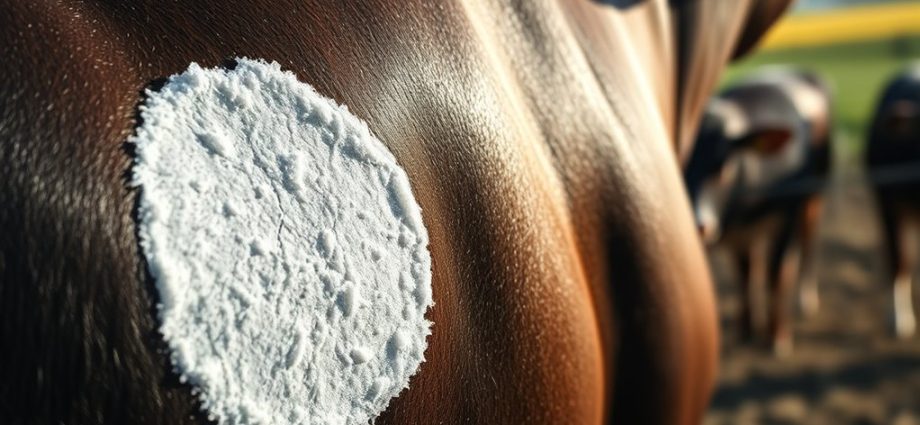
Freeze branding is a technique you use to create permanent white marks on livestock by applying extreme cold, usually with a liquid nitrogen-chilled iron. This cold kills pigment cells in the hair follicles, causing white hair to grow back instead of the animal’s natural color, making identification easy and lasting. It’s less painful and damaging than hot branding, preserving the hide and promoting faster healing. Understanding its process and advantages can help you see why it’s preferred in modern animal marking.
Although traditional hot-iron branding has long been the standard for livestock identification, freeze branding offers a precise, less painful alternative by using extreme cold rather than heat to create permanent marks. Freeze branding, also called cryo-branding, permanently identifies animals by altering hair pigmentation in a designated pattern. Instead of burning skin and leaving scars like hot-iron branding, freeze branding destroys the pigment-producing cells called melanocytes within hair follicles. The result is white hair regrowth in the branded area, contrasting sharply with the animal’s natural coat color. Though initially developed for cattle, this method is also applicable to horses, dogs, and other livestock. It is less intrusive than traditional methods, which contributes to quicker healing times and reduced pain in animal subjects.
Freeze branding uses extreme cold to create painless, permanent white marks by altering hair pigmentation in livestock.
You’ll find that freeze branding originated in the mid-1960s, specifically around 1966, when Prof. R. Keith Farrell from Washington State University first performed it for agricultural identification. Farrell even secured the U.S. patent 3,362,381 in 1968 for his innovative Cryo-Branding technique. The process quickly gained traction in Europe, with commercial use starting in Sweden in 1966 and soon after in the UK in 1967. Despite early skepticism from American ranchers, who worried about the potential for tampering through dyeing, freeze branding gradually proved its worth as a viable, low-damage option for marking livestock. It was developed as a more ethical alternative to traditional hot branding methods, aiming to reduce pain and tissue damage.
The technical foundation of freeze branding relies on a branding iron chilled to temperatures between –100°C and –300°C using liquid nitrogen or a dry ice and alcohol bath. When applied firmly to the clipped and cleaned skin of the animal for a duration of 30 to 60 seconds, this extreme cold eradicates the melanocytes in the hair follicles. Because the follicles become damaged, they produce white hair instead of the animal’s natural hue. The timing of the application depends on factors such as species, age, and hair type to guarantee effective results without skin injury. Done properly, freeze branding avoids the deep tissue damage and painful burns typical of hot branding.
Your application procedure will start by closely clipping the hair in the chosen area and cleaning it—often with alcohol—to guarantee good contact. After cooling the branding iron fully in liquid nitrogen or a dry ice/alcohol mixture, you then press it against the skin firmly for approximately 40–45 seconds, adjusting time for calves or older animals as needed. The process is efficient, taking roughly 3 to 10 minutes per animal and costing only about five cents per head when using dry ice, making it practical for ranching operations.
Freeze branding offers several critical advantages over hot branding. It causes less pain and stress, with animals showing discomfort typically only fifteen to thirty minutes after the branding. The method also minimizes hide damage, preserving the leather’s quality for commercial use. The resulting white hair marks provide excellent visibility across most coat colors and lighting conditions. Research confirms that brands applied to younger animals remain clearer and more readable over time compared to those on older livestock. Additionally, freeze branding carries a lower risk of infection and allows faster healing since it doesn’t inflict thermal burns. Experts also note that despite these benefits, complications like scarring and delayed healing can occasionally occur, emphasizing the importance of skilled application.
Primarily used for cattle and horses in ranching and breeding, the technique has variants like the Alpha-Angle Freeze Mark system, devised in the 1970s to create unique, tamper-resistant IDs for horses. This system includes symbols representing 46 U.S. states, the federal government, and 20 horse breeds. Beyond livestock, freeze branding has even extended to dogs, seals, and some experimental animal subjects, illustrating its versatility. While occasionally mentioned in body modification circles, it remains uncommon outside of agricultural contexts.
With proper application, freeze brands can remain legible for five to six years, although readability depends on factors like the animal’s age and the quality of hair regrowth. The precision and permanence of freeze branding make it an effective and humane choice for animal identification, offering you a highly visible, minimally invasive marking method that maintains the wellness and value of your livestock.
Conclusion
Now that you know freeze branding uses extreme cold to create permanent marks on animal fur or skin, it’s clear how precise and effective this method is. Curiously, freeze branding reduces infection risk by up to 50% compared to traditional hot branding. This makes it not only a durable identification technique but also a safer, more humane choice for livestock management. By understanding freeze branding, you’re equipped to appreciate its technical advantages and practical applications.
Comments are closed, but trackbacks and pingbacks are open.