
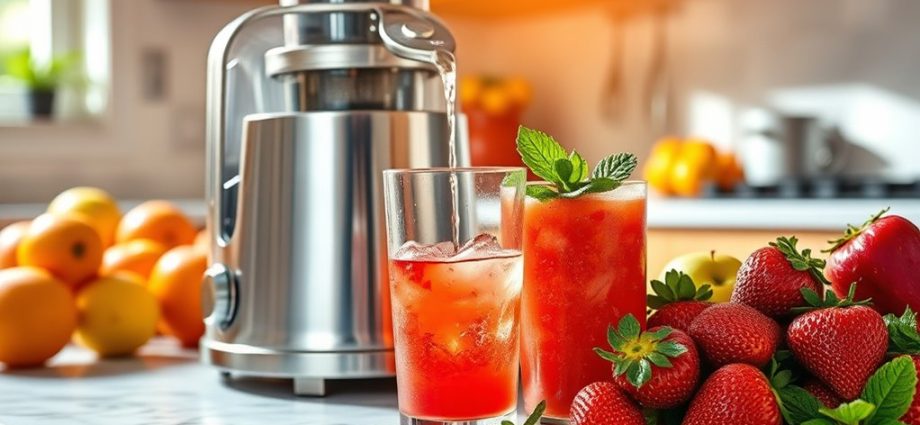
To make homemade fruit juice in five easy steps, start by selecting a mix of colorful, ripe fruits that complement each other’s flavors. Rinse them well and prepare by cutting, peeling, and removing any inedible parts. Next, extract the juice using a press or blender, then sweeten and balance the flavors with natural ingredients like honey or citrus juice. Finally, store your fresh juice in airtight glass containers. Stay tuned to learn more about maximizing the taste and quality of your juice.
Selecting the Right Fruits
When making homemade fruit juice, selecting the right fruits is essential for achieving a delicious and nutritious blend.
Start by choosing fruits with complementary flavors to balance sweetness, tartness, and acidity, enhancing the overall taste. Aim for a colorful variety; different hues guarantee a broader nutrient range and visual appeal. Common fruits like apples, oranges, and pineapples provide a great base, while hydrating fruits such as cucumber and watermelon add reviving qualities. Opt for seasonal fruits for the best flavor and cost. Prioritize fruits rich in vitamins and antioxidants for added health benefits, but remember to take into account sugar content. Selecting ripe, firm fruits will guarantee quality juice and maximize nutrient content, leading to an invigorating and healthy drink. Additionally, using juices packed full of nutrients can boost the health benefits of your homemade juice blend.
Preparing Your Fruits
After selecting the right fruits, it’s time to prepare them for juicing. Start by rinsing your fruits thoroughly under cool running water to eliminate dirt and pesticides. For firm fruits like apples, use a vegetable brush for a deeper clean. Avoid soaps, as they can leave harmful residues. Remove any bruised or spoiled parts to keep your juice fresh. Additionally, incorporating a mix of citrus fruits can enhance the sweetness and complexity of your juice.
Next, peel citrus fruits to reduce bitterness and trim off any inedible portions. Cut larger fruits into manageable pieces for your juicer or blender. Remember to remove seeds and pits from fruits like cherries and pomegranates, as they can impart off-flavors.
If you’re not juicing right away, toss cut fruits in lemon juice to prevent browning and store them in airtight containers.
Extracting Juice Efficiently
To extract juice efficiently, several methods can maximize both yield and quality.
Mechanical pressing, particularly with HPX presses, quickly extracts 70-80% of juice in the first 20 minutes, optimizing your results.
Enzyme-assisted extraction can further boost yield by breaking down cell walls, allowing trapped juice to flow freely.
By applying pectinases, you not only enhance extraction but also clarify your juice, reducing the need for filtration.
Centrifugation offers a faster separation of juice and pulp, especially for fibrous fruits, though it may be costlier.
Finally, integrating filtration techniques helps remove suspended solids, improving clarity and texture.
Each method has its advantages, so choose based on your fruit type and desired juice quality.
Sweetening and Adjusting Flavor
Sweetening and adjusting the flavor of homemade fruit juice is essential for achieving a balanced and enjoyable taste.
Begin by selecting your sweetener—granulated sugar, honey, or agave nectar work well, while fruit juice concentrates can enhance flavor without adding extra sugar. Measure sweetness accurately using a refractometer; aim for around 10-15 Brix for natural juices. Adjust incrementally to avoid over-sweetening.
Select your sweetener wisely, measuring sweetness with a refractometer for the perfect balance.
To balance flavors, add a splash of lemon or lime juice for acidity, or mix in complementary ingredients like ginger. To enrich texture, consider natural syrups or pectin. Always take care to dissolve ingredients thoroughly and avoid boiling your juice too long, as this can diminish its fresh flavors.
Enjoy your perfectly sweetened juice!
Storing and Serving Your Juice
Properly storing and serving your homemade fruit juice is essential for maintaining its freshness and nutritional value.
Use airtight, clean glass containers to minimize exposure to oxygen and light. Avoid plastic, as it allows for oxygen seepage that speeds up nutrient loss. Fill your containers to the top before sealing to reduce air space, and consider vacuum sealing to extend freshness to 5-7 days.
Refrigerate your juice at 35-40°F for peak quality. If freezing, use freezer-safe glass containers, leaving space for expansion.
When serving, keep the juice chilled and use clean utensils to avoid contamination. Strain out any sediment for a smoother texture, and try to consume leftovers quickly to prevent spoilage.
Enjoy your revitalizing juice!
Conclusion
Now that you’ve mastered the art of homemade fruit juice, let your taste buds dance with delight as vibrant flavors burst to life in every sip. You’ve transformed simple fruits into liquid sunshine, nourishing your body and tantalizing your palate. Whether you’re sipping on a revitalizing morning elixir or a zesty afternoon treat, remember that each glass is a canvas for your creativity. So, grab those fruits, get blending, and savor the sweet symphony of flavors you’ve crafted!