
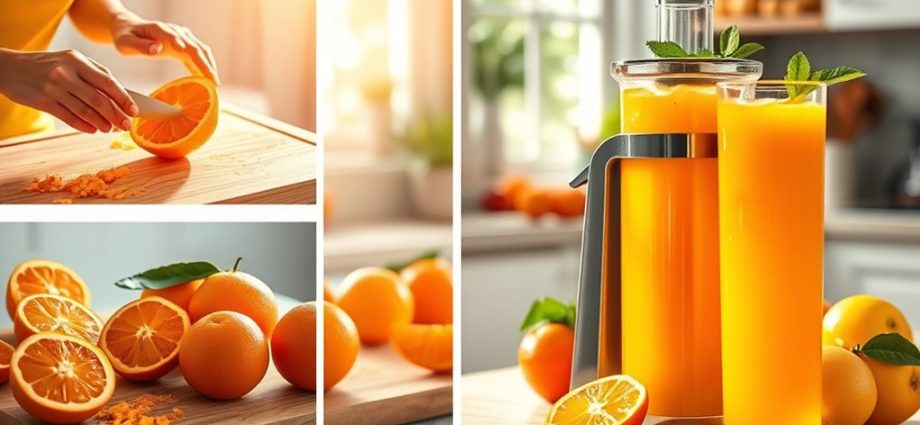
To make juice in three simple steps, start by washing your fruits and veggies thoroughly. Then, choose your juicing technique—either a masticating or centrifugal juicer works well, depending on your needs. Finally, serve your juice chilled at 38°F to 42°F for the best taste, or slightly warmer for citrus juices. Remember, the fresher you drink it, the more nutrients you’ll get. There’s even more to explore about maximizing flavor and nutrition.
Preparing the Produce
To make delicious juice, start by preparing your produce properly. Wash all fruits and vegetables under cold running water to remove dirt, debris, and pesticides. For organic produce, consider using an antimicrobial wash or a baking soda-water solution.
Inspect your produce, discarding bruised or damaged parts. Trim tough ends from veggies like carrots and peel citrus fruits to avoid bitterness. Cut larger items, like melons and apples, into smaller pieces for easy juicing. If you’re using soft fruits like berries, blend them into a puree first.
Finally, verify your juicer and workspace are clean and sanitized to prevent contamination. Prep only what you need to enjoy the freshest juice possible. Juices are packed full of nutrients and provide a great way to incorporate more veggies into your diet.
Juicing Techniques
Juicing Techniques
When it comes to juicing techniques, choosing the right method can greatly impact the flavor and quality of your juice.
For a bright, fresh taste, use a masticating juicer; its slow process minimizes oxidation and maximizes juice yield. If you’re in a hurry, a centrifugal juicer offers fast results but may require more peeling and chopping.
For small batches, consider manual juicing by hand, especially with citrus fruits. Don’t forget to prepare your ingredients properly—cut fibrous items against the grain and layer soft and hard produce when feeding into the juicer to optimize flow. High-yielding ingredients like apples and cucumbers are known to produce more juice, enhancing the overall flavor and nutritional profile of your drink.
Each technique has its merits, so pick one that suits your needs and enjoy delicious, homemade juice.
Serving and Storage
Proper serving and storage of juice is essential for maintaining its flavor, freshness, and safety. Serve most juices chilled between 38°F and 42°F to enhance their taste, while citrus juices can be slightly warmer for improved aroma.
Storing juice at or below 41°F is critical; this helps reduce microbial growth and preserves quality. Use airtight, food-safe containers to minimize oxidation. Check the label for “Best by” dates; unpasteurized juices have a shelf life of seven days in the fridge.
Storing juice at or below 41°F reduces microbial growth and preserves quality; opt for airtight containers to minimize oxidation.
Transport juice at 41°F or below to avoid safety risks. For home storage, glass containers work best, and adding lemon juice can extend the freshness.
Always consume fresh juice promptly for the best flavor and nutrition.
Conclusion
So, you’ve mastered the art of juicing in just three simple steps—who knew health could be so effortless? Ironically, while you’ve turned fruits and veggies into liquid gold, don’t forget that drinking your calories may lead to consuming more than you intended. Remember to savor every drop! Store your juice properly, and always aim for the freshest flavors. Ultimately, balancing whole produce with your juice can help keep your wellness routine in check. Cheers to your health!