
To ship cold food, start by choosing insulated boxes with thick walls and leak-proof seals. Use gel packs or dry ice for proper cooling, placing them on multiple sides of the products. Secure your packages with strong tape and avoid airtight seals when using dry ice. Confirm the food is tightly sealed to prevent leaks. Monitor temperature during transport and consider expedited shipping to minimize transit time. There’s more you should know to secure safe and fresh delivery.
Shipping cold food requires careful attention to maintain its quality and safety during transit; consequently, it’s essential to choose the right packaging and cooling methods. First, you’ll want to select appropriate packaging. Opt for insulated shipping boxes or containers with thick walls—at least 1.5 inches—preferably made from Styrofoam or specialized coolers. These materials help maintain temperature stability.
Verify that the containers are leak-proof but not airtight to allow for gas escape when using dry ice, which prevents odor and leakage. The size of your container is important, too; it should accommodate both the food and the refrigeration agents without too much empty space to limit thermal exchange. Adding protective layers like plastic liners, foam inserts, or paper fillers can help eliminate air pockets, enhancing insulation.
Don’t forget to seal the packages securely using multiple strips of packing tape, ideally employing the H taping method for added integrity during handling.
Ensure your packages are tightly sealed with multiple strips of packing tape, using the H taping method for maximum security.
When it comes to coolants, you’ve got options such as dry ice, gel packs, and ice packs. For items that need to be refrigerated between 34°F (1°C) and 50°F (10°C), gel packs are your best choice. However, you should handle dry ice shipments with care since dry ice is classified as dangerous goods and requires proper labeling and handling to comply with regulations. It’s crucial to ensure products remain at consistent low temperatures throughout transit to preserve quality and mitigate risks. Using temperature-controlled shipping options can further ensure that your perishable items are kept at the ideal temperature during transport.
Strategically placing gel packs on at least three sides of the product helps prevent uneven cooling and keeps the cold chain intact. Always remember to avoid direct contact between ice packs or gel packs and food to prevent any sogginess; using barriers like bags or containers is advisable.
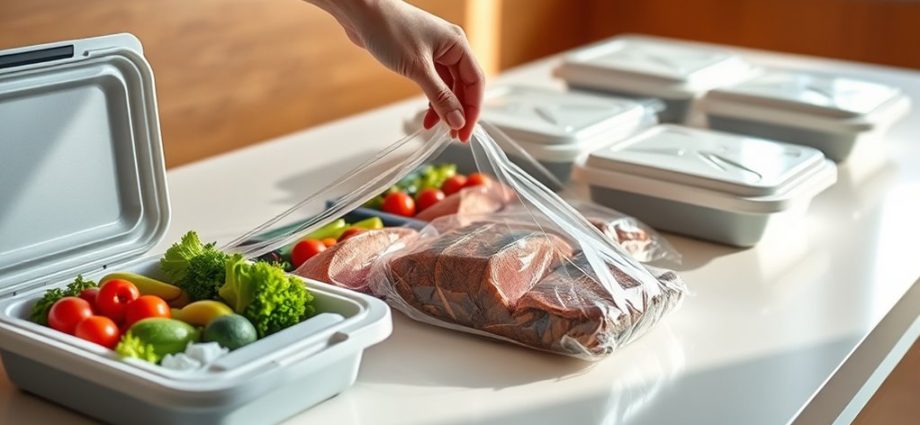
Next, you need to focus on packaging and sealing the food items properly. Seal all food items tightly in airtight or vacuum-sealed bags or containers to preserve freshness and minimize cross-contamination.
Double-bag liquids and any items likely to leak to avoid spills during shipping and opt for leak-proof containers for those liquids. For frozen foods, additional layers of protection like plastic wrap or aluminum foil are wise choices. If you’re dealing with moisture-sensitive foods, consider moisture-wicking gel packs to mitigate humidity and spoilage risks. Avoid airtight seals on packaging when using dry ice to allow for gas release, which prevents ruptures or explosions.
Lastly, maintaining cold chain integrity is imperative throughout transit. Use refrigerated vehicles or reliable insulation methods to keep a consistent temperature.
Opt for carriers that offer overnight or expedited shipping to reduce transit time and preserve product quality. Monitoring and recording temperatures at all stages of transport is essential to comply with food safety regulations. Make sure you prepare for temperature deviations, as even slight variations can risk spoilage.
Setting up contingency plans, such as refrigerated trucks with backup refrigeration, is a smart move to manage delays successfully. With the right preparations, you can ship cold food safely and efficiently, keeping it fresh and enjoyable for the recipient.
Conclusion
In the grand scheme of food transportation, successfully shipping cold food might as well be rocket science. By following these steps, you’ll transform mundane meals into meals that traverse oceans without ever losing their chill. Remember, a slightly warm dish is the culinary equivalent of delivering a snowman to the Sahara! So, deploy those ice packs, seal those containers, and watch your food arrive at its destination as fresh as a polar breeze. Cold food shipping is an art—master it!
Comments are closed, but trackbacks and pingbacks are open.