
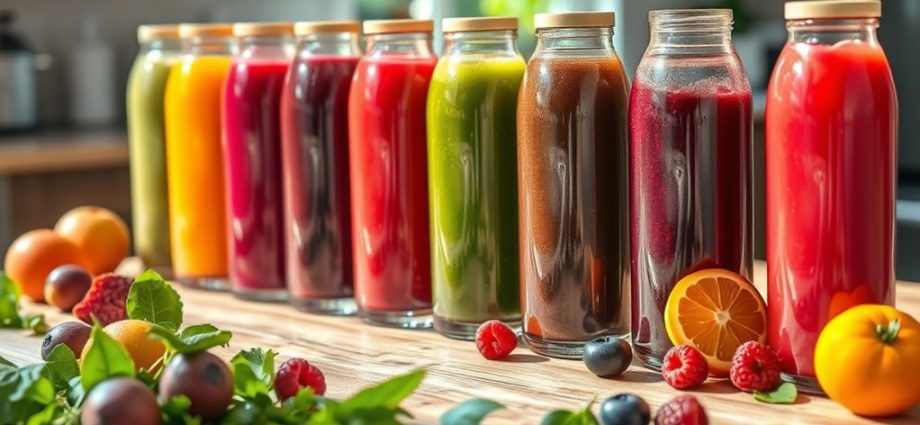
A juice fast plan involves consuming only fruit and vegetable juices for a limited period, usually between one and five days. It aims to provide concentrated nutrients while giving your digestive system a break. However, this practice can lead to nutrient deficiencies and rapid weight loss primarily from water loss rather than fat. It’s essential to evaluate potential risks and benefits before starting. Learn more about what to expect during a juice fast and its implications.
A juice fast plan involves consuming only fruit and vegetable juices for a limited timeframe, typically ranging from one to five days. During this period, you’ll eliminate all solid foods, greatly reducing your calorie and nutrient intake. Often, the juices you use are cold-pressed, which helps retain maximum nutrients such as vitamins C, E, beta-carotene, and polyphenols. To stay hydrated, some people might mix in minimal water or simple homemade concoctions, but the focus remains on the juices themselves. Remember, key components like protein, fats, and fiber from whole foods are excluded during this fast.
Advocates of juice fasting often claim several benefits. The concentrated dose of antioxidants and vitamins can support your immune defense while potentially reducing chronic disease risk. Additionally, by removing solid food intake, you might give your digestive system a break, which could improve gut health. Increased hydration from the juice may support kidney function and aid mild detoxification processes, resulting in a feeling of “clean energy” from the natural sugars and nutrients in the juices. Many individuals report feeling revitalized, particularly after shifting from a less nutritious diet. Furthermore, juice cleanses often include blended options which retain pulp for added fiber content, enhancing satiety.
Juice fasting may boost immunity and gut health while providing hydration and energy from nutrients.
However, it’s important to approach these claims with skepticism. Scientific and medical perspectives highlight that there’s insufficient evidence backing juice fasts for toxin removal or long-term weight loss. Your body is naturally equipped with efficient detoxification mechanisms via the liver, kidneys, and digestive system, so special diets aren’t necessary for this purpose. Juice fasts often lack balanced nutrition due to low protein, fat, and fiber content. Consequently, any weight loss observed is mainly the result of water loss and muscle glycogen depletion, both of which are typically regained after you resume normal eating patterns. Additionally, relying on juice fasts is associated with nutritional deficiencies that can be harmful over time.
Potential risks and concerns also accompany juice fasting. Hypoglycemia can occur, leading to weakness, headaches, or fainting, particularly if you extend the fast. The absence of dietary fiber may negatively impact your gut microbiome, resulting in increased inflammation or gut permeability. Additionally, the high sugar content in fruit juices can adversely affect your liver health, blood sugar levels, and dental hygiene. If you pursue juice fasting repeatedly or without medical supervision, you could face malnutrition due to the absence of essential macronutrients.
In terms of weight loss and metabolism, juice fasts are primarily associated with rapid weight loss, primarily from water depletion rather than fat loss, and this weight typically rebounds as soon as you eat normally again. The caloric restriction associated with juice fasting can lead to a temporary metabolic slowdown, which complicates long-term weight management. Medical professionals often caution against viewing juice fasts as quick fixes for weight loss, as they can potentially foster disordered eating patterns.
While short-term juice fasting might slightly improve gut bacteria linked to health, weighing the benefits against the risks is essential before initiating such a plan.
Conclusion
A juice fast plan can rejuvenate your body and mind, providing essential nutrients while eliminating processed foods. You might worry about feeling hungry, but imagine sipping on vibrant juices bursting with flavors and nutrients that keep you energized. Scientific research suggests that short-term juice fasting can enhance detoxification, promote weight loss, and boost overall well-being. Embrace the experience, and you’ll likely find that your cravings for unhealthy foods diminish as your body thrives on the freshness of nature’s bounty.
Comments are closed, but trackbacks and pingbacks are open.