

To boost digestion and gut health, try juices like lemon for gastric support, red cabbage for anti-inflammatory benefits, and orange juice for beneficial gut bacteria. Beet juice enhances nutrient absorption, while celery juice offers hydration. Ginger juice can reduce nausea effectively. Carrot juice supports gut barrier function, and pineapple juice provides bromelain for better digestion. Integrating these juices can promote overall digestive health, and you’ll discover more about their unique benefits as you explore further.
Lemon Juice for Digestive Support

Lemon juice offers a potent boost for your digestive health, making it a valuable addition to your diet. Its acidity stimulates gastric secretions, enhancing digestive fluids that break down food more efficiently. This increased gastric acid can also support age-related declines in stomach acid levels, reducing bloating and indigestion. Drinking lemon juice with starchy foods lowers post-meal blood glucose spikes by around 35%, while promoting feelings of fullness. If you consume lemon juice with pulp, you’ll benefit from its soluble fiber, which supports gut health and stabilizes blood sugar. Incorporating lemon juice regularly can help manage weight and prevent digestive discomfort, making it a simple yet effective tool for supporting your overall digestion. Additionally, the fiber compounds in the pith of lemon may contribute to improved digestive health by enhancing gut function.
Red Cabbage Juice: Anti-Inflammatory Benefits
As inflammation plays a key role in various digestive disorders, incorporating red cabbage juice (RCJ) into your diet could provide noteworthy anti-inflammatory benefits.
Research shows that RCJ considerably reduces pro-inflammatory cytokines like TNF-α and IL-6 while boosting the levels of the anti-inflammatory cytokine IL-10. This shift in your body’s cytokine balance can lead to lower inflammation and improved gut health.
RCJ significantly lowers pro-inflammatory cytokines while elevating anti-inflammatory responses, promoting reduced inflammation and enhanced gut health.
Additionally, RCJ enhances the abundance of beneficial gut bacteria, which increases short-chain fatty acids (SCFAs) that support gut barrier function. Red cabbage juice also exhibits anti-oxidative effects that mitigate intestinal damage.
Histological studies indicate that RCJ improves intestinal tissue architecture, reducing inflammatory cell infiltration.
Orange Juice and Gut Microbiota Modulation
Orange juice offers more than just a revitalizing taste; it plays a significant role in modulating gut microbiota. When you regularly consume orange juice, you’ll notice a decrease in certain bacterial genera, like Blautia and Eubacterium hallii, while beneficial bacteria such as Bifidobacterium and Lactobacillaceae flourish.
This shift enhances your gut health by increasing short-chain fatty acids and reducing harmful ammonia levels. Additionally, the prebiotic effects of orange juice boost beneficial microbes and improve metabolic health, lowering insulin resistance and cholesterol levels.
Regular intake even promotes the abundance of Actinobacteria, which is linked to better gut health. By integrating orange juice into your diet, you’re not just enjoying a tasty drink but also supporting a healthy gut microbiome.
Beet Juice to Enhance Gut Health
While orange juice offers notable benefits for gut health, beet juice also stands out as a powerful ally in enhancing your digestive system.
Drinking beet juice can change your gut microbiota, increasing beneficial bacteria like Akkermansia muciniphila and Bifidobacterium while decreasing harmful strains. Its fiber content not only boosts beneficial gut bacteria but also improves stool bulk and regularity, helping to prevent constipation.
Additionally, the antioxidants in beet juice reduce inflammation and oxidative stress in the gut, promoting overall gut health. The rich nitrate content enhances blood flow to your intestines, improving nutrient absorption.
Regularly including beet juice in your diet can lead to a balanced, healthier digestive system.
Celery Juice for Improved Hydration
Celery juice serves as an excellent option for enhancing your hydration levels. Composed of about 95% water, it’s a flavorful way to meet your daily hydration needs.
Here are a few benefits of incorporating celery juice into your diet:
- Provides essential electrolytes like potassium, helping maintain fluid balance.
- Contains vitamins A, C, and K, which support hydration status and overall health.
- Offers low calories and sugar, making it guilt-free while hydrating.
While it’s not superior to plain water, celery juice complements your hydration efforts with additional nutrients.
Consider drinking it alongside regular water for peak hydration support. Just remember to consume it in moderation, as excessive intake may cause digestive upset.
Apple Juice and Digestive Enzymes
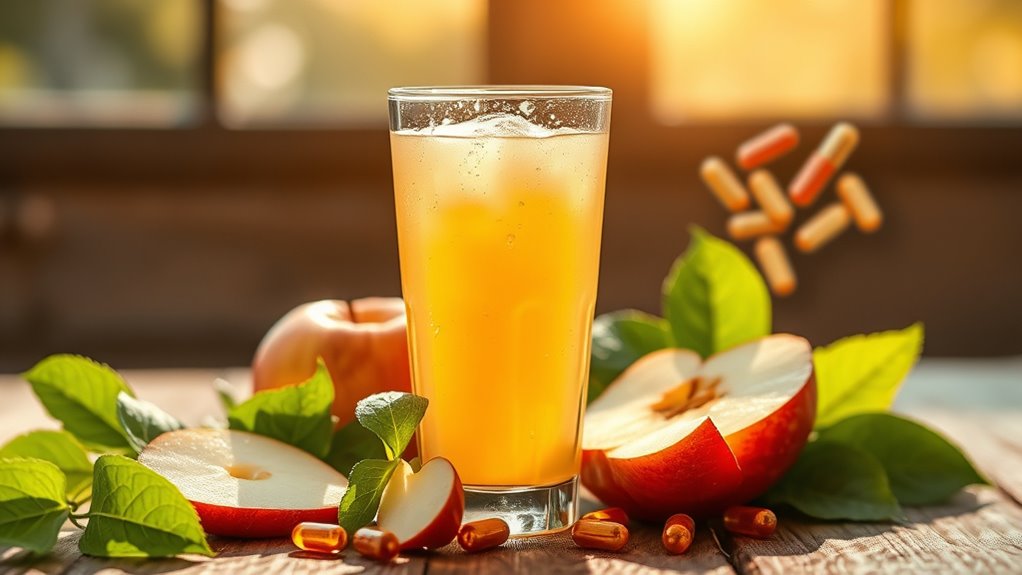
Incorporating juices into your diet can greatly impact your digestion, and one particularly effective option is apple juice. It’s packed with polyphenols that not only act as antioxidants but also help inhibit digestive enzymes like α-amylase and α-glucosidase. This inhibition can slow carbohydrate breakdown and glucose absorption, potentially lowering your risk for obesity and type 2 diabetes.
Moreover, apple juice bolsters your gut health by enhancing antioxidant enzyme activity, protecting your digestive tissues from oxidative stress. The fermentation of apple juice also fosters beneficial probiotics, improving gut microbiota balance.
Carrot Juice for Gut Barrier Function
Carrot juice can be a powerhouse for gut barrier function. Rich in prebiotic polysaccharides, it supports your gut microbiota and enhances barrier integrity. Here are some key benefits:
- Short-Chain Fatty Acid Production: Fermentation of carrot juice boosts SCFAs like butyrate, which strengthen gut cell walls.
- Microbiota Regulation: Fermented carrot juice enriches beneficial bacteria such as *Akkermansia*, supporting a balanced gut environment.
- Anti-Inflammatory Effects: Components like anthocyanins reduce inflammation markers, protecting your colon from oxidative stress.
Integrating carrot juice into your diet can improve gut health considerably, promoting a resilient gut barrier and a thriving microbiome.
Pineapple Juice: Bromelain for Digestion
When you’re looking to enhance your digestion, pineapple juice stands out due to its rich bromelain content.
Bromelain is a group of enzymes that breaks down proteins into smaller peptides and amino acids, making nutrients more bioavailable. This natural enzyme can alleviate digestive discomfort like bloating and gas, particularly for those with low enzyme production.
Studies suggest that bromelain may also combat certain harmful gut bacteria and soothe gut inflammation, offering dual benefits for your digestive health.
While fresh pineapple has the highest bromelain concentration, enjoying pineapple juice regularly still provides valuable enzymatic and anti-inflammatory support.
Incorporating pineapple juice into your diet can help maintain a healthy gut microbiome and enhance overall digestive function.
Green Juice With Leafy Veggies for Fiber Benefit
While you might be familiar with the benefits of fiber, incorporating green juice made from leafy vegetables can amplify your digestive health.
Leafy greens like spinach and kale provide soluble fiber that promotes gut health by supporting beneficial bacteria and reducing bloating. Here are some key benefits you’ll gain:
- Promotes regular bowel movements: Soluble fiber helps improve stool consistency, reducing constipation.
- Supports gut bacteria: Acting as a prebiotic, leafy greens encourage the growth of beneficial microbes.
- Enhances micronutrient absorption: The vitamins and minerals in these greens help maintain gut lining integrity and overall digestive function.
Ginger Juice for Anti-Nausea Effects
Ginger juice is a powerful remedy for combating nausea, with studies showing it can notably reduce symptoms associated with various conditions, including morning sickness and chemotherapy.
Research indicates that ginger, particularly in doses between 0.5 to 1.0 grams, can significantly lessen nausea intensity, especially in early pregnancy and after chemotherapy. It works by enhancing gastric motility and reducing inflammation, effectively calming the digestive tract.
While clinical trials show mixed results, about five out of seven indicate favorable outcomes. For best effects, consider consuming ginger juice regularly or preemptively, noticing results within 20 to 30 minutes.
Conclusion
Incorporating these juices into your routine can be a game changer for your digestive health. Think of your gut as a flourishing garden; each juice nurtures it in its own unique way. By embracing these natural remedies, you’re not just sipping on flavor but also fostering a balanced microbiome. Remember, just like a fine symphony requires harmony, a diverse diet of these juices can create a melody of energy and wellness within you. Cheers to better digestion!