
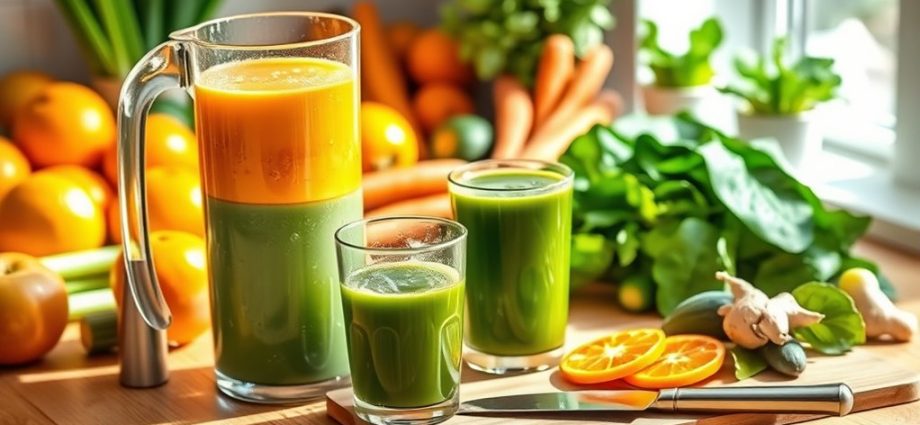
You can start juicing with simple, nutrient-dense combos that boost vitamins, antioxidants, and hydration. Try a Basic Green Juice with cucumber, celery, spinach, green apple, and lemon for a mild, invigorating option. A Carrot Orange Ginger mix supports immunity and skin health, while a Beet-Carrot-Apple blend may help blood vessel function. Always wash produce, juice soon after cutting, and enjoy without added sugar. If you continue, you’ll discover more beginner-friendly recipes and tips.
Juicing as a beginner doesn’t have to be complicated or extreme—it’s a practical way to increase your intake of vitamins, antioxidants, and hydration using familiar fruits and vegetables. Most home juicing setups rely on two main types of machines: centrifugal (fast) juicers and masticating (slow or cold-press) juicers, each with different trade-offs in cost, speed, and juice quality. You start with produce you already know: apples, pears, grapes, melons, oranges, or pineapples, plus gentle greens like spinach or lettuce. These ingredients supply vitamin C, folate, and hydration while keeping flavors approachable. By focusing on whole fruits and vegetables, you support immune function, skin health, and digestion without relying on added sugars.
When you build easy juice recipes, think in simple categories: something sweet, something hydrating, something green, and a flavor booster. For sweetness, you can use apples, pears, melons, mangoes, or grapes. For hydration, cucumbers and celery work well because they contain a high water content and help your juicer yield more liquid. For greens, start with spinach or kale, then add herbs such as mint, basil, or parsley to give a fresh aroma without many extra calories.
A classic beginner option is a simple green juice. Combine parsley, cucumber, lemon, green apple, fennel, and celery. The cucumber and celery provide fluid and electrolytes, while parsley and fennel may support digestion through their fiber and phytonutrients. Lemon adds tartness and vitamin C, and green apple balances any bitterness. Drink it in the morning to rehydrate after sleep and start your day with a concentrated source of micronutrients.
If you prefer something sweeter, try a Green Goddess style blend. Juice celery, cucumber, green apple, and pear. This combination stays light but gives you potassium, vitamin K from celery, and soluble fiber residues from apples and pears, which help support healthy blood lipids and satiety. Because the flavors are mild, this recipe works well when you’re adjusting to the taste of green juices.
For an immune and skin focused option, use carrots, oranges, and a small piece of ginger. Carrots provide beta-carotene, which your body converts to vitamin A, essential for vision, skin integrity, and immune regulation. Oranges supply additional vitamin C and flavonoids, and ginger contributes compounds like gingerols that show anti-inflammatory and digestive benefits in research. This Carrot Orange Glow juice tastes bright and slightly spicy, so you can enjoy it without added sweeteners.
If you’d like a deeper, more earthy flavor, make a beet-based juice. Combine beets, carrots, celery, apple, and ginger. Beets contain pigments called betalains, which act as antioxidants and may support blood vessel function. Carrots and apples soften the earthiness and add natural sugars, while celery boosts hydration and sodium replacement after exercise. Start with a small beet and increase gradually as you adapt to the taste.
To keep your juicing routine sustainable, wash and trim produce well, feed it slowly into the juicer, and drink your juice soon after making it to limit vitamin loss from air and light exposure. If you’re choosing equipment, remember that centrifugal juicers are usually less expensive and easier to use, while masticating models tend to extract more liquid and keep juice tasting fresh for longer.
Conclusion
As you take your first sips, remember you’re not just drinking juice—you’re running a small, daily experiment. Each glass delivers measurable nutrients, supports hydration, and may improve markers like energy, digestion, and blood pressure over time. Track how you feel, rotate ingredients, and watch the data of your own body unfold. Because tomorrow, when juicing feels routine, you might notice something unexpected: your habits—and your health—quietly transforming into a stronger, clearer, energized version of yourself.
Comments are closed, but trackbacks and pingbacks are open.