
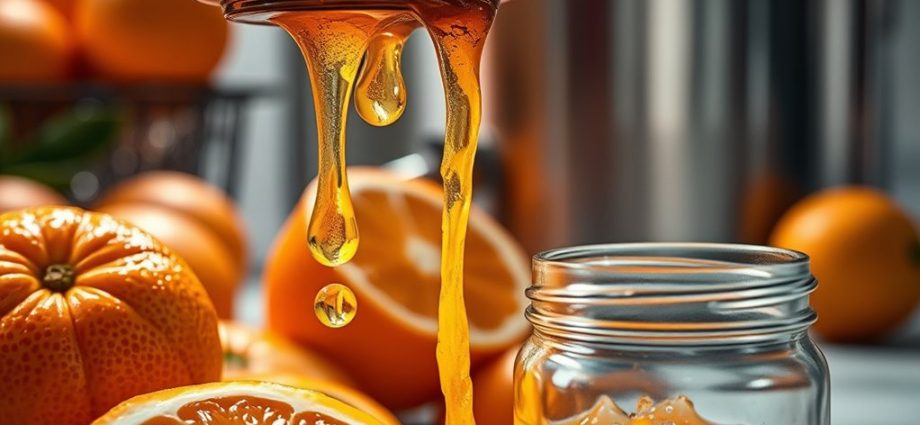
Concentrated fruit juice is a thick syrup created by removing most of the water from freshly squeezed juice. The process begins with high-quality fruit, which is squeezed, filtered, and pasteurized to preserve flavor and safety. Water is then removed through methods like vacuum evaporation, maintaining a rich flavor profile. The concentrate’s high sugar and acid content extends its shelf life. Discovering more about its production and benefits can enhance your understanding of this versatile ingredient.
Concentrated fruit juice offers a convenient solution for those seeking the rich flavors of fresh juice without the bulk. It consists of fruit juice where most of the water has been removed, resulting in a thick, syrupy liquid with a high content of soluble solids, typically ranging from 65% to 72%. While this concentration process drastically reduces the volume, often by a 4:1 to 6:1 ratio, it retains the essential sugars, acids, and flavor compounds of the original juice. Consequently, concentrated fruit juice becomes an ideal base for reconstituted juices, beverages, desserts, ice creams, and flavorings.
To create concentrated juice, you start with freshly squeezed juice extracted from ripe, high-quality fruits that have been harvested at their peak maturity. This step is vital, as it guarantees you’re working with peak flavor and nutrient content. After crushing and pressing the fruit, the juice is filtered to eliminate pulp, seeds, and solids, resulting in a clarified liquid. Pasteurization follows, in which the juice is exposed to controlled temperatures for a designated time to inactivate spoilage microorganisms and enzymes while minimizing flavor and nutrient loss. While concentrate production allows for consistent taste despite individual fruit flavor differences, pure juice maintains the natural flavors and nutrients. Fruit juice concentrates serve as potent ingredients in culinary applications, enhancing various recipes and beverages.
For the water removal process, the main commercial method is vacuum evaporation conducted under reduced pressure. By lowering the boiling point of water, this method allows the concentration to happen at temperatures between 15°C and 40°C, helping to preserve quality. A more advanced approach involves multi-effect evaporators that utilize secondary steam for heating, offering improved energy efficiency. Alternative methods like freeze concentration and membrane concentration, the latter using high pressure to force water through semi-permeable membranes, are also employed in specific situations.
A significant challenge during concentration is managing aroma and flavor. When water evaporates, volatile aroma compounds can be lost, which may result in a flat or artificial taste in the final product. Aroma recovery systems come into play here, capturing and condensing these volatiles for re-addition to the concentrate or reconstituted juice. It’s vital to blend this recovered aroma back into the final product to maintain the natural flavor profile.
To guarantee safety and quality, the concentration process is conducted under controlled, hygienic conditions. Post-evaporation, the concentrates are rapidly cooled to prevent microbial growth. Once cooled, the final product is packaged in sterilized containers, enhancing preservation. The low water activity in concentrates due to high sugar and acid content provides a longer shelf life than fresh juice and often eliminates the need for refrigeration until opened.
When you’re ready to enjoy the juice, reconstitution involves mixing the concentrate with the appropriate amount of drinking water, usually at a ratio of about 2:1, although this can vary based on the fruit and desired strength. Sometimes, reconstituted juice might also receive additional sugars, flavors, preservatives, or vitamins to enhance its appeal.
Through modern food technology, you’re assured consistent-tasting juice, regardless of seasonal fruit variations, giving you the taste of fresh fruit juice at your convenience.
Conclusion
In the end, you’ll find that concentrated fruit juice is simply a luxurious illusion, stripping away the water to create a punchy essence. Ironically, in our quest for convenience, we condense nature’s bounty into a syrupy concentrate, promising us flavor while hiding the reality of freshness. So next time you sip that vibrant juice, remember, you’re not just enjoying fruit—you’re savoring a carefully crafted combination of science and convenience, all while the real fruit waits patiently on the sidelines.
Comments are closed, but trackbacks and pingbacks are open.