
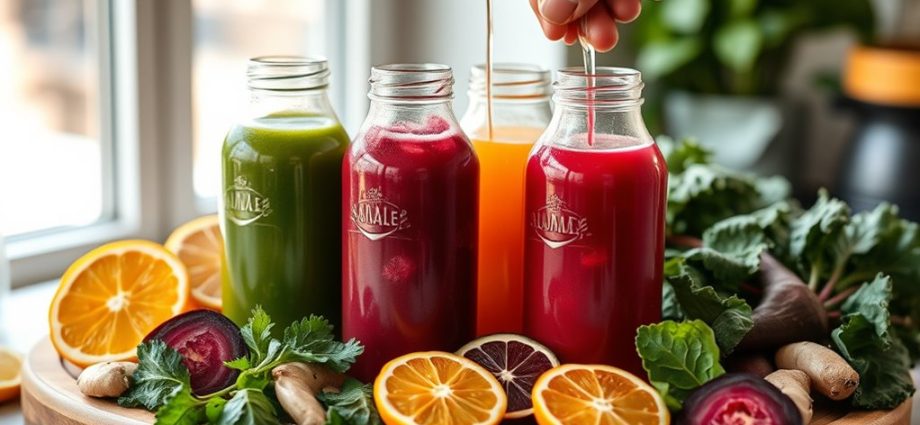
You’ll replace meals for 1–5 days with mostly raw fruit and vegetable juices, often cold-pressed, to cut calories and boost micronutrient intake. You’ll sip every few hours, hydrate well, and usually start with a light plant-based lead-in. Some people see short-term weight and antioxidant changes, but benefits are often temporary. Risks include low protein, electrolyte imbalance and fatigue, so limit duration and consult a clinician. Keep going to learn practical tips and reintroduction steps today.
What a Juice Cleanse Involves
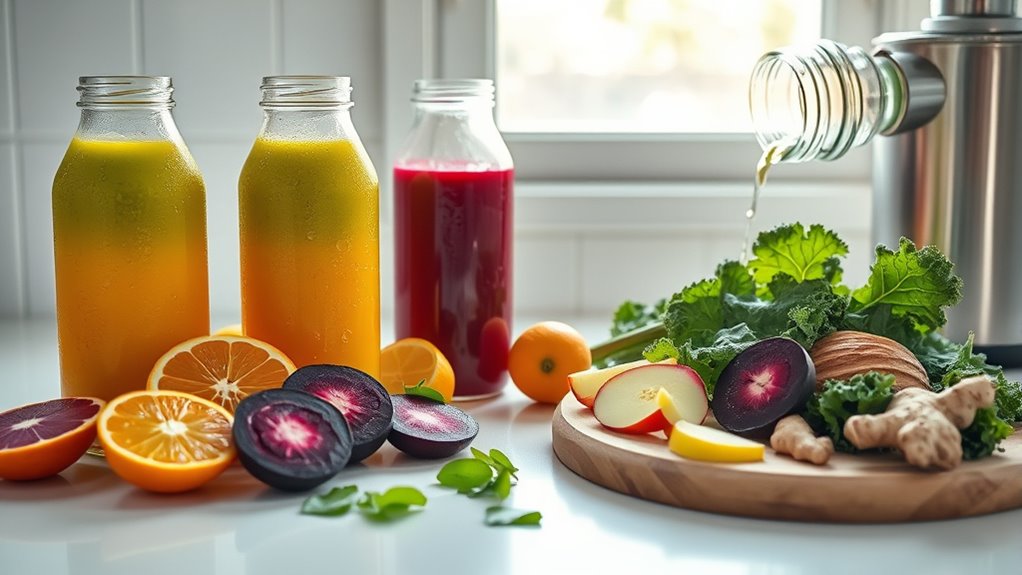
If you choose to do a juice cleanse, plan it as a short, structured intervention—commonly one to five days, with beginners often starting at one to three—plus several days of pre- and post-cleanse adjustment to reduce discomfort and rebound effects.
You’ll prepare by shifting to a light, plant-based diet and cutting alcohol, sugar, processed foods, meat, dairy, wheat and caffeine for several days.
Choose mostly raw, cold-pressed juices made from diverse organic fruits and vegetables, and consider including probiotic or higher-fiber blends; commercial options work if you can’t juice at home.
Favor raw, cold-pressed juices from diverse organic fruits and vegetables; include probiotic or fiber-rich blends—commercial juices work.
During the cleanse, drink juices every 2–3 hours and at least 2 liters of water daily, avoid solids, rest more, monitor symptoms, and reintroduce solids gradually afterward.
Many people report that short cleanses boost energy.
Adjust length based on your tolerance.
Potential Benefits and Scientific Evidence
Juice cleanses can produce short-term changes—like rapid weight and BMI reductions, shifts in gut bacteria, and transient rises in circulating antioxidants—but the evidence shows these effects are mostly temporary, mechanistically limited, and unevenly beneficial.
You may see quick weight loss largely from glycogen and water depletion rather than fat, with benefits often fading within weeks.
Short-term microbiome shifts occur, sometimes reducing fiber-dependent Firmicutes and increasing Proteobacteria linked to inflammation.
Juices deliver vitamins, minerals, and antioxidants and boost hydration, which can support kidney function, but there’s no reliable human evidence that they “detox” synthetic or environmental pollutants.
Animal data hint at metabolic effects, yet don’t prove human benefit.
Before trying a cleanse, it’s wise to consult a doctor because juice-only regimens can increase the risk of nutrient deficiencies.
Risks, Practical Tips, and Reintroduction Plan
Overview: A short-term juice cleanse can cause rapid fluid and glycogen loss, low blood sugar, and nutritional gaps you should watch for.
Risks include malnutrition from low protein and fat, fatigue, dizziness, muscle and bone loss, dehydration, electrolyte imbalance, and microbiome disruption from fiber removal.
Juice cleanses can cause malnutrition, fatigue, dizziness, muscle and bone loss, dehydration, electrolyte imbalance, and gut microbiome disruption.
To reduce harm, limit cleanses to a few days, favor vegetable-based juices, avoid commercial products with unsupported claims, hydrate well, and stop if you experience fainting, severe weakness, or prolonged headache.
When reintroducing foods, go gradual: start with small portions of cooked vegetables and soft fruits, then add moderate protein and healthy fats to support muscle repair.
Move slowly to avoid bingeing, blood sugar swings, digestive distress, and psychological strain.
Consult your clinician before and during a cleanse period.
Conclusion
You might expect a juice cleanse to wash toxins out overnight, but you know your liver and kidneys already do that reliably; a short juice period can give you more veggies and less ultra-processed food, yet it won’t replace balanced eating or medical treatment. If you try one, plan sensibly: stay hydrated, limit sugar, don’t fast if you’re pregnant or diabetic, and reintroduce solids slowly. You’re choosing a reset, not a miracle overnight or permanently.