
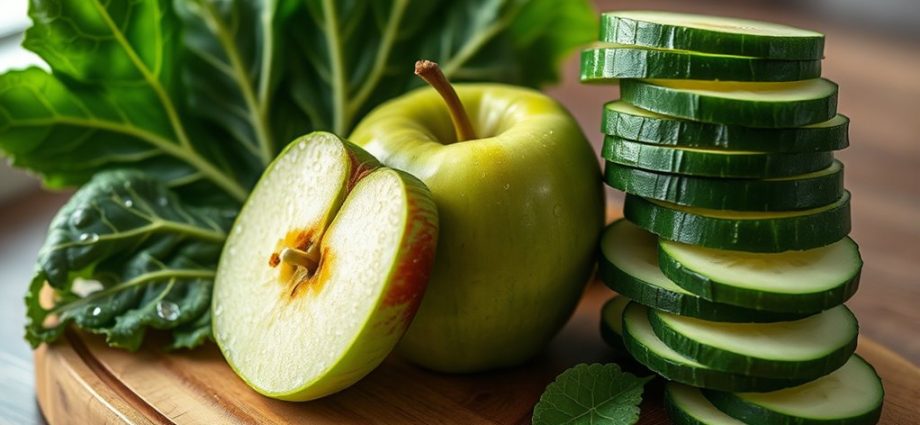
You’ll want three essentials for a nutrient-rich green juice: a dense leafy green like spinach or kale for vitamins A, C and K plus iron and magnesium; a high-water vegetable such as cucumber, celery or romaine to boost hydration and electrolytes; and a low-glycemic fruit or zero-calorie sweetener — think apple, pear, stevia or monk fruit — to add gentle sweetness and fiber without spiking blood sugar. Keep rotating greens and you’ll find more practical tips ahead.
Nutrient-Dense Leafy Greens
Leafy greens pack a lot of nutrition into few calories, so if you want a nutrient-dense base for green juice, choose them first: they supply vitamins A and C for immune and skin health, abundant vitamin K for bone and clotting support, plus potassium, iron, calcium, and magnesium for blood pressure, oxygen transport, bone strength, and nerve function. They are nutrient-dense and low in calories. When you’re prioritizing kale, spinach, collards, watercress, or endive, you get concentrated antioxidants like carotenoids, kaempferol, polyphenols, and chlorophyll that protect cells and reduce inflammation.
Start green juice with leafy greens — low-calorie, nutrient-dense sources of vitamins A, C, K, potassium, iron, calcium, and magnesium.
Their fiber supports digestion, satiety, glycemic control, and a healthy microbiome. Folate and vitamin K1 contribute to cognitive resilience.
Tailor leaf choices to taste and nutrient goals, and rotate varieties to maximize broad-spectrum benefits. Consult a professional for personalized guidance regularly.
Hydrating Vegetables
After you’ve chosen nutrient-dense greens as a base, add high-water vegetables to your juice to boost fluid intake and electrolyte balance: cucumber, celery, romaine, zucchini, and bok choy are about 94–95% water and supply potassium, magnesium, sodium, and calcium that help retain fluids in cells.
Choose cucumber and celery for rapid rehydration; their water-plus-electrolyte profile supports cellular volume and can reduce fatigue.
Romaine and bok choy add mild flavor plus potassium and calcium to stabilize blood pressure.
Zucchini contributes hydration and potassium for muscle function.
Juicing breaks down cell walls, releasing water and soluble electrolytes for faster absorption than whole vegetables. Cold-pressed juice preserves these nutrients, making it an efficient, low-calorie option to help meet daily fluid needs after exercise or during heat exposure. This liquid format makes many nutrients easily absorbed.
Natural Sweeteners and Fiber From Fruits
When you add fruit to green juice, you get more than sweetness: fruits supply natural sweeteners, fiber, and nutrients that affect flavor, blood sugar, and satiety.
Choose low-glycemic sweeteners (stevia, monk fruit, coconut sugar) or whole fruits (apples, pears, berries) to lower glycemic load and add prebiotic fiber that supports digestion and fullness. Limit high-calorie choices like dates or honey to control calories and blood sugar.
- Use stevia or monk fruit for zero-calorie sweetness and minimal glycemic impact.
- Add apples or pears for soluble fiber, gentle sweetness, and sustained energy.
- Reserve 1–3 dates or a small drizzle of maple syrup when you need quick energy, mindful of calories.
Tailor portions to your goals and monitor glucose if diabetic and consult a clinician as needed.
Conclusion
You’ll feel fresher when you sip green juices made from nutrient-dense leafy greens, hydrating vegetables, and naturally sweet fruits. Rely on research-backed choices to boost vitamins, hydration, and fiber while moderating sugars. You’ll see steady energy and softer skin when you prioritize spinach, cucumber, and apple. I’ll help tailor blends to your tastes and health goals, so you get sustainable, simple solutions that support wellbeing and daily nutrient needs bright balanced benefits bring better balance.