
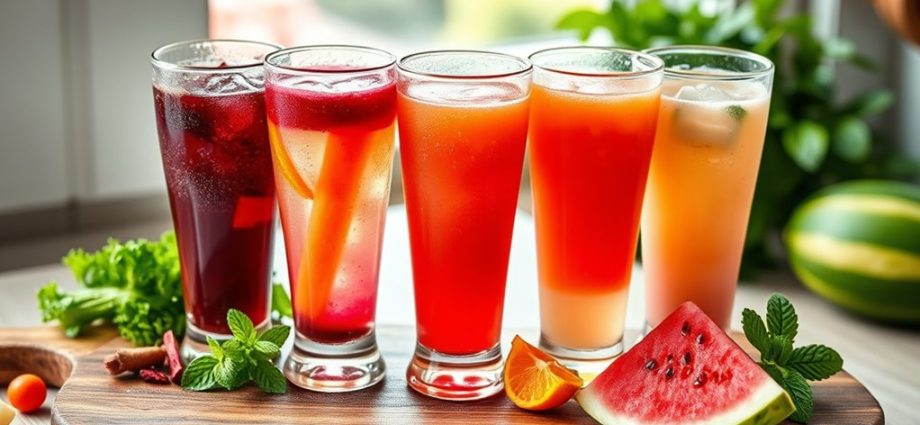
You can favor low‑calorie, nutrient‑dense juices that boost satiety and metabolism: a low‑sodium vegetable blend, green leafy juice (spinach, kale, cucumber, lemon, ginger), unsweetened pomegranate juice, beetroot juice for stamina, and a citrus‑berry mix. They provide vitamin C, A, potassium, nitrates, polyphenols and fiber to help curb appetite and support exercise. Use whole ingredients, avoid added sugars, and pair juices with high‑fiber foods for lasting fullness — keep going to see tips and serving ideas.
Low‑Sodium Vegetable Juice Blend
Low‑sodium vegetable juice blends give you a low‑calorie, nutrient-dense option for increasing vegetable intake without adding many calories—an 8‑ounce serving runs about 50 calories, supplies up to 120% of the RDA for vitamin C and roughly 40% for vitamin A, and delivers about 820 mg potassium with only ~140 mg sodium and ~2 g fiber.
Use it to replace sugary drinks or to boost vegetable servings in a calorie-controlled DASH-style plan; trials show daily low-sodium vegetable juice increases vegetable intake, vitamin C and potassium, and supports weight loss and smaller waist circumference in metabolic syndrome.
Because sodium stays low, you’ll limit water retention while getting electrolytes.
Remember juice lacks full fiber of whole produce, so pair it with high-fiber foods for satiety daily.
This product is known for its low sodium content.
Green Leafy Vegetable Juice
When you swap a sugary drink for a green leafy vegetable juice, you get a low‑calorie, nutrient‑dense boost that supports weight loss without adding many calories.
Choose spinach, kale, cucumber, lemon and a touch of ginger to combine vitamin C, E, potassium and magnesium that aid metabolism, muscle function and fluid balance. If you include pulp, fiber increases satiety; pure juice delivers fewer fibers but more rapid nutrient absorption.
Spinach, kale, cucumber, lemon and ginger deliver vitamins, potassium and magnesium — pulp adds fiber, juice absorbs faster
Ginger and lemon have thermogenic and fat‑oxidation properties that complement exercise. Chlorophyll and leafy compounds can reduce cravings, support liver detox pathways and ease bloating, improving digestion and nutrient uptake.
Use green juices as a hydrating, micronutrient‑rich adjunct to a balanced diet and regular activity for sustainable weight loss. Track portions to control calories daily. Green juice is a nutrient-dense option that helps increase overall vegetable and micronutrient intake.
Pomegranate Juice
After leafy greens, add pomegranate juice as a nutrient‑dense, low‑calorie option that supports weight goals. You’ll get about 65 calories and 15 g carbs per 100 mL, plus potassium (215 mg) and negligible fat.
Its polyphenols and remaining fiber help prolong fullness; studies report reduced hunger and lower subsequent intake after consumption. Clinical trials and a meta‑analysis show modest weight, BMI and fat‑mass reductions with regular intake, while antioxidants improve insulin sensitivity, lipids and inflammation—factors that support metabolic health.
For results, use unsweetened juice (about 120 mL daily in trials), pair it with balanced meals and exercise, and monitor portions to avoid excess sugar.
Consider whole seeds or extract supplements if you need higher polyphenol doses. Discuss supplements with your clinician if needed soon.
Beetroot Juice
Because beetroot juice is low in calories (about 43 kcal/100 g) and rich in dietary nitrates and antioxidants, it can be a practical addition to a weight‑loss plan when you want an energizing, nutrient‑dense drink that supports exercise and vascular health.
Low‑calorie, nitrate‑rich beetroot juice boosts energy, vascular health and exercise performance—an energizing addition to weight‑loss plans.
You can use it to replace higher‑calorie beverages and to boost nitric oxide, which improves blood flow, stamina, recovery and mitochondrial function during workouts.
Beetroot provides betaine and antioxidants that support liver detoxification and reduce inflammation, aiding metabolic health.
However, systematic reviews show nitrate or beetroot supplementation alone doesn’t reliably lower weight, BMI or fat mass in humans.
For appetite control and digestion, prioritize whole beetroot or include greens for fiber while using juice to enhance exercise capacity and monitor portion sizes regularly.
Citrus and Berry Juice Blend
While beetroot juice can boost exercise capacity and vascular health, a citrus-and-berry blend gives you concentrated vitamin C, polyphenols and low‑calorie hydration that have been linked in meta‑analyses and randomized trials to modest reductions in BMI, waist circumference and improved lipid profiles.
You can use blends of orange, lemon and mixed berries to increase antioxidants and polyphenols, potentially improving lipid oxidation, insulin sensitivity and nitric oxide–mediated blood flow.
Consume pure juices without added sugars and control portions, since natural sugars can spike glucose and juicing reduces fiber.
Short-term juice interventions also alter gut microbiota in ways associated with weight loss and lower lipid oxidation biomarkers.
Think of these blends as a nutrient-dense adjunct to a calorie-controlled diet rather than a standalone cure or supplement.
Conclusion
You’ll notice that choosing low‑sodium vegetable blends, leafy greens, pomegranate, beetroot, and citrus‑berry mixes often aligns with hunger control, hydration, and nutrient density — a coincidence that research supports. When you swap sugary drinks for these juices in moderation, you lower calorie intake, boost potassium, antioxidants, and nitrates, and help satiety. Use them as part of a balanced plan, not a miracle cure, and track portions to see practical, measurable results over weeks, not days, consistently.