
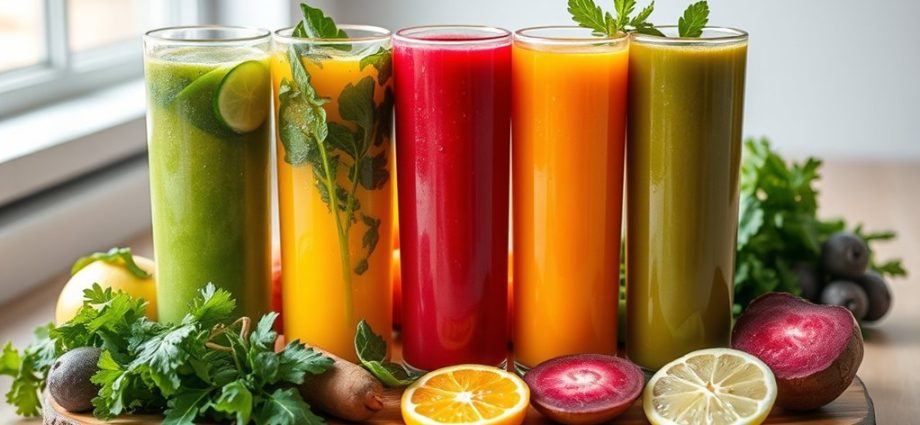
You can support weight loss with five low‑calorie juices that boost satiety, hydration and nutrient intake: a green metabolism booster (kale/spinach, cucumber, celery, tart apple, lemon, ginger, optional cayenne), a six‑vegetable mix (celery, cucumber, carrot, beet, greens, ginger), citrus with celery, beet‑carrot‑apple, and tomato‑grape. They’re fiber‑light if juiced, calorie‑controlled, and useful as a snack or premeal. Try them within a balanced plan and you’ll get practical tips and precautions ahead with simple serving suggestions too.
Green Metabolism Booster Juice
Try a simple green metabolism booster you can make in minutes: leafy greens (kale or spinach), cucumber, celery, a tart green apple, lemon, and a thumb of fresh ginger—with optional cayenne for extra thermogenesis.
A quick green metabolism booster: leafy greens, cucumber, celery, tart apple, lemon, ginger, and optional cayenne.
You’ll get a low‑calorie, nutrient-dense drink that supports satiety, hydration, and antioxidant intake. Use a juicer or blend with water for fiber retention; aim for under 100 calories per serving by keeping fruit minimal. They are also rich in antioxidants. Lemon and ginger add mild thermogenic effects backed by research, and cayenne can increase energy expenditure. Watch portions if you have kidney issues or blood sugar concerns.
Consume fresh, pair with balanced meals and activity, and rotate greens for vitamin variety and sustainable weight-loss support. Consult your clinician for personalized guidance if you have medical conditions.
Six-Vegetable Juice
Blend six vegetables—celery, cucumber, carrot, beetroot, kale or spinach, and a thumb of ginger—to make a low‑calorie, nutrient‑dense juice that supports satiety, hydration, and metabolic function.
You’ll typically use three to four celery stalks, one cucumber, two carrots, a small beet, a handful of greens, and one to two centimetres of ginger; wash, peel where needed, chop, and cold‑press to retain enzymes.
This combination delivers potassium, vitamin K and C, betalains, and antioxidants that help reduce inflammation, aid liver detox pathways, and modestly raise thermogenesis.
At roughly forty to ninety kilocalories per serving, it’s practical as a snack or light meal replacement within a calorie‑controlled plan.
Drink alongside balanced meals, monitor portions, and adjust ingredients for taste, tolerance, and goals for consistent, sustainable results. Be sure to wash all ingredients thoroughly before juicing.
Citrus and Celery Juice
One cup of citrus-and-celery juice combines the low‑calorie, highly hydrating benefits of celery with the vitamin C and flavonoids of citrus, giving you a nutrient‑dense drink that can help reduce calorie and added‑sugar intake when it replaces sugary beverages.
You’ll get hydration, vitamin K, vitamin C, potassium and folate, with about 33–80 calories depending on citrus added and 3–10 g natural sugar. Use it to swap for soda or sweetened coffee to cut calories; don’t expect magical fat loss.
Juicing removes most insoluble fiber, so you’ll feel less full than eating whole produce. Drink it as part of a balanced plan — combine portion control, varied foods, and regular activity for lasting weight change.
Check sodium content if you juice commercially or add too much salt.
Beet-Carrot-Apple Juice
Drinking beet–carrot–apple (ABC) juice gives you a nutrient‑dense, low‑calorie beverage—about 45–50 kcal per 100 ml—that supplies vitamin A, vitamin C, potassium, folate, iron and antioxidants while providing roughly 8–9 g natural sugar per 100 ml.
Use it to reduce calorie intake without sacrificing nutrients; fiber from apple and carrot helps you feel full and slows sugar absorption, supporting stable blood glucose. Beetroot’s nitrates boost blood flow and exercise stamina, so you can burn more calories during workouts.
Regular moderate intake supports digestion, liver detox pathways and skin health, but limit portions to avoid excess oxalates and sugars. Combine the juice with whole-food meals, track portions, and adjust frequency to your weight‑loss plan.
Consult clinician if you have kidney stones, low blood pressure, or diabetes.
Tomato Grape Juice
Tomato–grape juice offers a low‑calorie, nutrient‑dense option you can use to support weight loss: when proportioned correctly (around 280 mL daily in studies) it supplies hydration, fiber and antioxidants like lycopene and grape polyphenols while keeping calories near ~60 kcal per serving.
Use it as a premeal beverage to increase fullness and reduce overall intake; the water and 1.5 g fiber per serving slow gastric emptying and curb cravings. The grape component provides polyphenols and a touch of natural sugar for palatability without excessive calories when blended modestly.
Regular intake has been linked to reductions in body fat and waist circumference, improved blood pressure and LDL, and better glycemic control.
Aim for balanced portions and pair with protein and fiber for sustainable results daily.
Conclusion
You’ll find these juices practical tools you can fit into your routine, and small, consistent choices often lead to meaningful changes. Backed by nutrient- and fiber-rich ingredients shown to support satiety and metabolic health, they complement—never replace—a balanced diet and activity plan. Start with one recipe, track how you feel, and adjust portions to your needs. Think of them like allies in your kitchen, helping you move toward sustainable weight goals over weeks and months.