
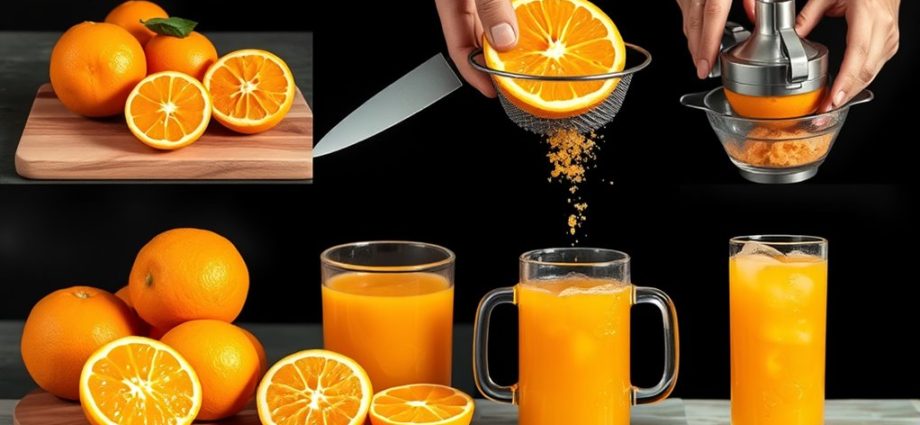
Choose four to six ripe oranges, wash and roll them to loosen your juice. Cut crosswise, remove seeds, then halve. Use a manual reamer, electric juicer, or pulse peeled segments in a blender with a little water. Strain for smooth juice or keep pulp for body. Taste and adjust with water, lemon, or a pinch of salt. Chill in a glass container and serve over ice — more tips on varieties, storage and equipment follow.
Use 4–6 medium oranges to make about 1–2 cups of fresh juice. You’ll start by selecting ripe, heavy oranges with smooth, firm skin; weight signals high juice content. Choose Navel for ease and sweetness, Valencia for maximum juice, Blood for color and tang, or Cara Cara when you want a milder, sweeter profile. Remember that orange juice contains less fiber than whole oranges, which can affect satiety. Wash each orange thoroughly under running water to remove dust, wax, and residues before you handle them.
Use 4–6 ripe, heavy oranges—Navel, Valencia, Blood or Cara Cara—wash thoroughly before juicing
Roll each orange on the counter while pressing down to break internal membranes and boost yield. Cut them crosswise for easier extraction, and remove visible seeds to avoid bitterness and choking hazards. If you’re using a blender, peel the oranges first so the peel doesn’t add excessive pulp or bitter oils. If you’ll use a manual reamer or press, halving the fruit is enough.
You can squeeze by hand with a citrus reamer or manual press, which yields about one third to one half cup per orange and gives you control over pulp. An electric citrus juicer speeds the job and is efficient when you’re preparing several servings. If you prefer a blender, pulse peeled, deseeded segments with a small amount of water, then strain the puree through a fine-mesh sieve or cheesecloth for smoother juice.
For larger batches or whole-fruit processing, use a centrifugal or masticating juicer; peel whole oranges as recommended by the manufacturer to prevent damage or excessive bitterness.
Straining is optional: leave pulp in for body and fiber, or strain for a cleaner mouthfeel. Taste the juice and adjust concentration with a little water if it’s too sweet or intense. If you want extra brightness, add a splash of lemon juice. A pinch of salt can enhance flavor, and a sprig of mint makes an attractive garnish when serving.
Serve the juice immediately over ice for peak flavor and nutrient retention. Fresh-squeezed orange juice loses vitamin C and subtle flavors through oxidation, so refrigerate in a sealed glass container if you’re not drinking it right away. Consume within two to three days for best taste and nutrient value. Shake or stir before serving if separation occurs.
If you like sweeter juice, add sugar, honey, or simple syrup to taste; dissolve sweeteners in a little warm water first for even distribution.
Keep portions in mind: an 8-ounce serving provides roughly 110–112 kcal, about 25–26 grams of carbohydrates largely from natural sugars, minimal fiber compared with whole fruit, and about 120–125 mg vitamin C plus useful potassium, folate, and thiamin. Because oranges are High in Vitamin C, a single cup can supply a substantial portion of the recommended daily intake.
Follow these steps and you’ll consistently produce fresh, balanced orange juice with predictable flavor and nutrition.
Conclusion
You follow the steps, you feel the sun in the peel, you watch a golden stream fill the glass. You squeeze with intent, you strain with care, you chill with patience. You taste brightness, you taste balance, you taste clarity. You serve refreshment, you serve warmth, you serve simplicity. You’re making orange juice cleanly, quickly, confidently — vibrant, aromatic, honest. You’re ready; drink and notice. You preserve sunshine, flavor, and calm in every small glass daily.
Comments are closed, but trackbacks and pingbacks are open.