

You’ll extract juice by applying steady mechanical pressure, a method rooted in antiquity and refined into modern “pressed” or cold‑pressed juicing. You crush and then press fruit or vegetables to separate liquid from dry pomace, keeping heat and oxygen low so nutrients and flavor stay intact. Compared with fast centrifugal spinning, pressing yields drier pulp, clearer juice, and gentler treatment of polyphenols. Keep going and you’ll learn how machines, shelf life, and nutrition differ subtly.
Definition and How Pressing Works
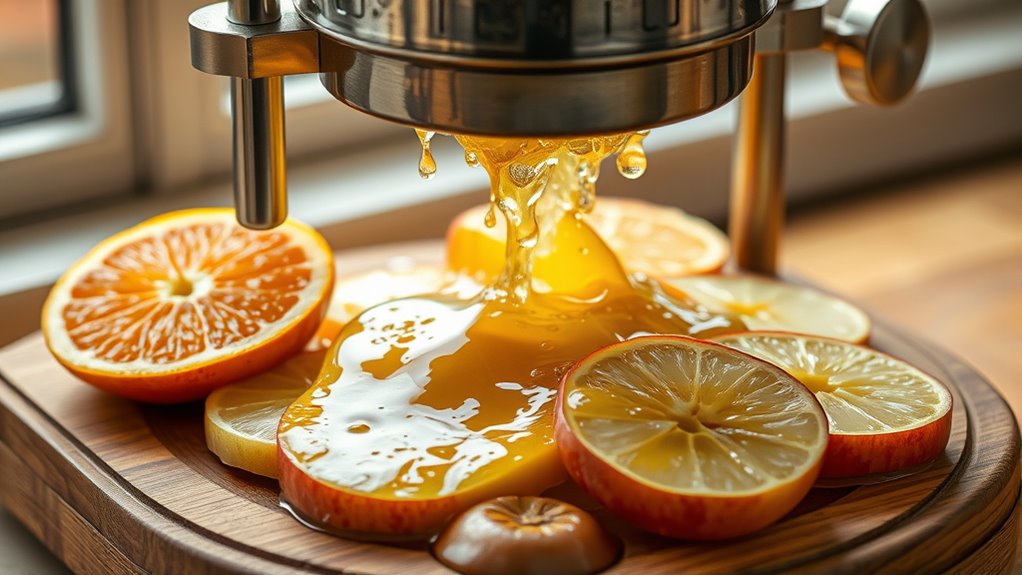
Pressing is a mechanical extraction technique that uses high, controlled pressure—typically from hydraulic or screw presses—to force juice from crushed fruits and vegetables while keeping heat and oxygen exposure low. Commercial cold-pressed juice production generally uses a two-step process involving shredding and pressing.
You’ll first grind or shred produce into a pulp with slow masticators or industrial shredders, then pack the pulp into filter bags or mesh drums.
A hydraulic press, often two plates, applies thousands of pounds of pressure, crushing cell walls so liquid drains into collection trays and dry pomace remains.
Because pressure is slow and intense, heat and oxygen are minimized, preserving enzymes, vitamins, and flavor.
Slow, intense pressure minimizes heat and oxygen, locking in enzymes, vitamins, and fresh flavor.
You’ll bottle and chill the juice immediately; without rapid sealing or HPP/pasteurization, freshness and nutrient levels decline within days.
You can compost or repurpose pomace for soil amendments.
Cold Press Vs Centrifugal Juicing
After covering mechanical pressing, you’ll want to compare cold-press and centrifugal machines: You decide between slow, root-like extraction and rapid centrifugal action rooted in industrial history. This difference stems from the fact that cold-press machines use a slow auger while centrifugal models use high-speed spinning blades.
Cold-press units grind and slowly press, yielding drier pulp, quieter operation, and broader ingredient range; they require pre-cutting, longer cycles, and higher upfront cost.
Centrifugal models spin rapidly, delivering fast juice, simpler cleanup, lighter weight, and lower price, but leave wetter pulp, struggle with leafy or fibrous items, and run louder with hotter motors.
Consider durability, maintenance, and workflow in your kitchen. Choose based on ingredient types and daily tempo.
- Cold-press: slower, higher yield, quieter
- Centrifugal: fast, cheaper, noisier
- Maintenance: cold-press more parts, centrifugal simpler
Historical lineage favors pressing for complexity and long-term value often.
Nutritional Advantages of Pressed Juice
Although rooted in ancient pressing traditions, pressed juice delivers concentrated micronutrients—vitamin C, potassium, A and K—and preserved polyphenols and flavonoids that support immune, vascular, skin and bone health.
Pressed juice concentrates vitamin C, potassium, A and K plus polyphenols—supporting immune, vascular, skin and bone health.
You’ll find vitamin C aids collagen and immunity, potassium helps regulate blood pressure and reduce arterial strain, vitamin A preserves vision and skin, and vitamin K supports bone integrity.
Pressing removes insoluble fiber, so you absorb micronutrients faster than from whole fruit, making it efficient for meeting dietary needs. Antioxidants in many pressed juices lower oxidative stress, inflammation and may improve vascular function, as seen with pomegranate.
Still, claims of superiority over juicing methods are debated; studies show similar antioxidant levels across pressing techniques. Use pressed juice as a targeted nutrient source, not a fiber substitute.
Equipment and Production Methods
As you consider the nutrient benefits of pressed juice, note that the machines that capture those micronutrients evolved from simple, root-level technologies — mortar and pestle, lever and screw presses used for wine and oil — into today’s engineered lines.
You trace that lineage in sorting and washing equipment that secures raw material quality, crushers and grinders that preserve pulp integrity, and presses designed to extract without heat.
Modern lines marry belt, hydraulic and spiral extractors with conveyors and stainless storage to maximize yield and hygiene. You rely on food-grade design and automation to scale traditional technique.
- Fruit sorting, washing, crushing
- Cold pressing: grind then slow press
- Hydraulic and belt presses, mesh bags and conveyors
These choices determine clarity, yield and production rhythm.
Buying Tips and Shelf Life Considerations
Many of the practices you use today to choose and store pressed juice trace back to the simple goal of preserving freshness from field to bottle: pick vibrant, firm produce; keep it cold; and avoid added sugars or preservatives.
When buying, prioritize organic and scan labels for ingredient order, absence of preservatives and added sugar, and sourcing transparency. Prefer HPP-treated bottles to retain nutrients without heat.
Note it’s essential to check printed best-by dates: unopened cold-pressed juice lasts roughly 3–7 days refrigerated; once opened, consume within 24–48 hours. Keep bottles below 40°F, sealed and upright, and use an insulated cooler during transport.
Check for off-odors, discoloration or gas. Online buys need cold-chain delivery; local shops let you inspect temperature immediately. Subscriptions secure regular shipments.
Conclusion
You’ll feel the history in every bottle: pressed juice traces back to root-pressing farms and ancient hydraulic mills. When you watched your grandmother press apples with a wooden screw press, juice pooled like sunlight — that image shows how gentle pressure preserves flavor. Studies show cold-pressed methods retain more vitamins and enzymes than fast centrifugal machines. So choose presses rooted in tradition and clarity; they extract nutrients precisely, slowly, and with respect for your health.