
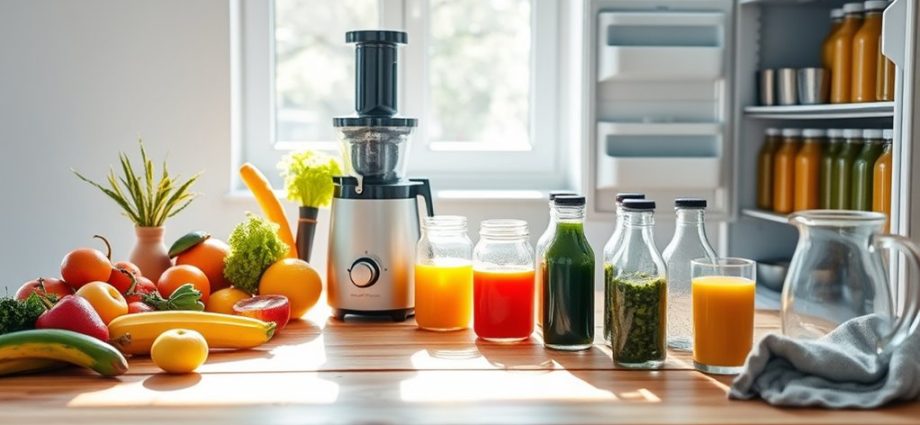
You’ll prep for three to five days by tapering stimulants, cutting caffeine and alcohol, eating light plant-based meals, hydrating and resting. Pick a realistic duration (one to seven days), gather a masticating juicer or a commercial kit, and plan five to six juices spaced every two to three hours totaling 48–64 ounces. Start with warm lemon water, rotate green and vegetable juices, and reintroduce solids slowly over several days. Keep going to learn safety tips.
Preparing Your Body Before the Cleanse
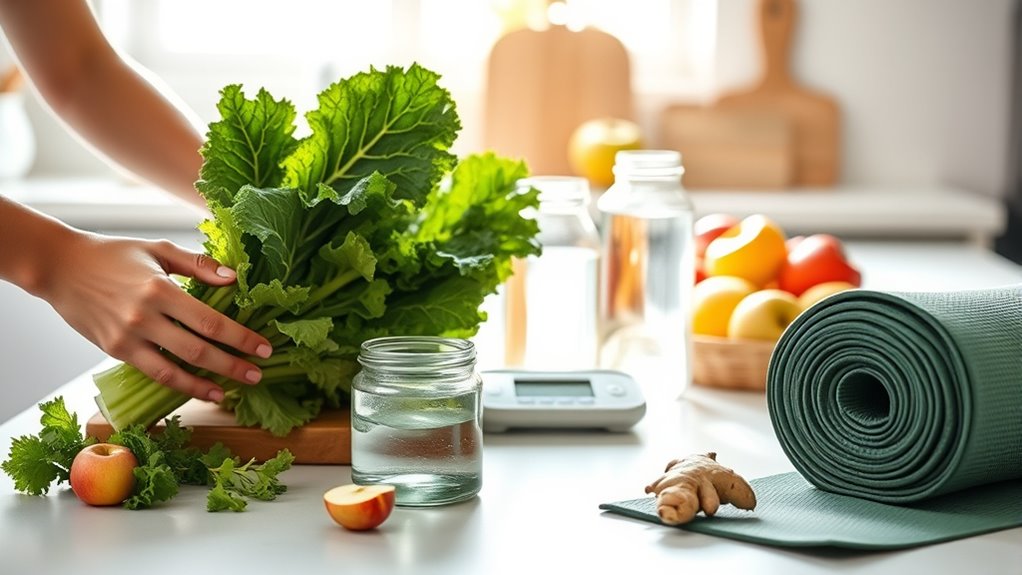
Before you start your juice cleanse, take 3–5 days to taper stimulants and heavy foods so your body can adjust: cut caffeine and alcohol, stop nicotine and nonessential OTCs unless your doctor says otherwise, and shift toward whole fruits, vegetables, light plant-based meals, and smaller portions. It also aids digestion.
Reduce caffeine gradually to avoid withdrawal; stop alcohol and nicotine to lower detox burden. Increase water to at least 64 oz daily, add morning 10–16 oz warm lemon water and sip lemon-infused fluids; herbal teas and probiotic beverages like kombucha can support digestion.
Cut caffeine, alcohol, and nicotine; hydrate—64 oz daily plus morning warm lemon water.
Prioritize whole fruits, vegetables, light plant-based meals, smoothies, and snacks of nuts or seeds while cutting refined sugars, dairy, and animal products.
Practice gentle exercise, sleep enough, and use mindfulness to manage cravings and symptoms.
Setting Up Your Juicing Plan and Supplies
Now that you’ve tapered stimulants and moved toward lighter, plant-based meals, set up a juicing plan and gather the supplies that match your goals and experience. They provide concentrated vitamins that help support energy and recovery during the cleanse.
Decide on cleanse duration (beginners 1–3 days; experienced 5–7) and choose a type — fruit-forward for cravings, vegetable-heavy or targeted formulas for specific goals.
Pick recipes (green: kale, spinach, cucumber, apple, lemon, ginger; red: beet, carrot, apple, orange, ginger; carrot/orange: carrot, orange, pineapple, turmeric) and weigh DIY versus pre-bottled cold-pressed options.
For DIY get a masticating juicer, sharp knife, cutting board, produce brush, glass or BPA-free bottles, labels and a cooler for transport.
Plan total daily volume and refrigeration strategy to keep juices fresh.
Consider commercial cleanse packages; many include guidance booklets and set juice sequences to simplify planning.
Daily Schedule and How to Consume Juices
If you want steady energy and stable blood sugar, drink 5–6 juices spaced about every 2–3 hours, beginning within an hour of waking (around 8–9 AM) and finishing by 6–7 PM.
Aim for 48–64 ounces total split into 5–6 servings so you’re getting roughly 1.4–1.9 liters daily.
Start with warm lemon water, then a green or citrus juice to boost metabolism. Sip each serving slowly, pair it with about 12 ounces of water or herbal tea, and listen to hunger cues while avoiding long gaps.
Rotate green, root, citrus and berry blends for balanced nutrients and antioxidants.
Keep evening juices light and low in sugar, finish the day with herbal tea or warm lemon water to support hydration and digestion.
Adjust timing to preference.
Transitioning Back to Solid Foods After the Cleanse
After finishing your last evening juice, plan a gradual return to solid foods over several days so your gut can readjust without overload.
Start Phase 1 (days 1–2) with hydrating broths, herbal teas, and low-sugar smoothies, plus small portions of watermelon or cucumber.
Phase 2 (days 3–4) adds steamed greens, sweet potato, bananas, avocado and whole grains like oatmeal or quinoa.
From day 5, reintroduce legumes, nuts, seeds and lean proteins such as fish, monitoring tolerance.
Eat small frequent meals, chew slowly, and keep portion control to reduce bloating and fatigue.
Continue hydration and prioritize low-sugar fruits, prebiotic vegetables and probiotics to support microbiota.
Avoid processed, spicy, heavy or high-sugar foods initially to preserve benefits and minimize digestive upset.
Consult a clinician if severe symptoms persist.
Conclusion
As you finish the cleanse, you’ll notice clearer energy and gentler digestion—like morning light easing through curtains. Stick to slow reintroduction of solids, beginning with cooked vegetables, fruit, and lean protein, because evidence shows gradual changes reduce gut upset. Listen to your body: if symptoms recur, pause and consult a clinician. Keep hydration, rest, and realistic expectations—this reset supports habits, not a quick fix, and you can build sustainable eating from here for lasting change.